

A personal story about taking the Andes slowly—and discovering that a thoughtfully paced itinerary can make all the difference.
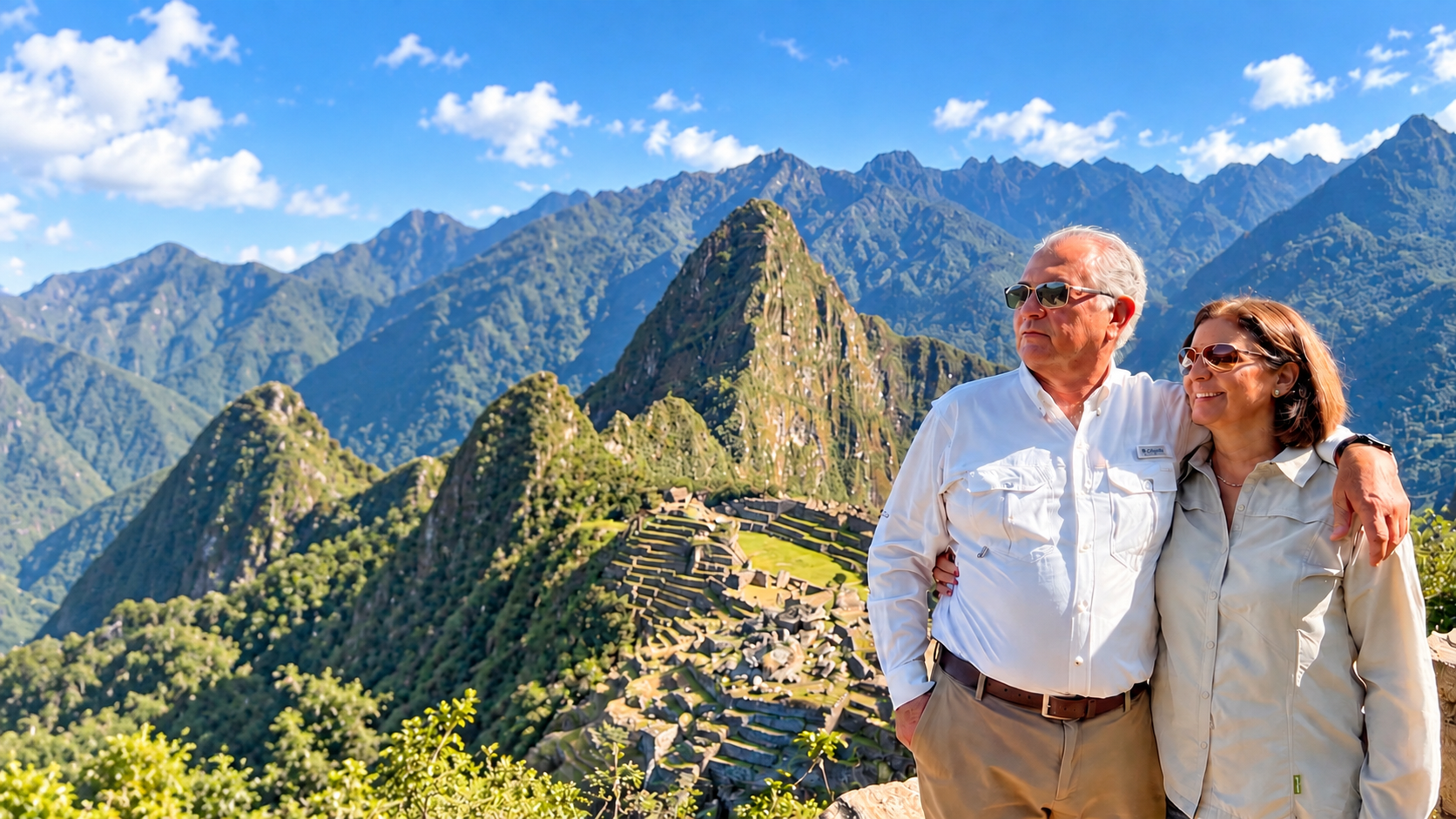
We never imagined that, at 71, we would feel this alive. But there we were—Eleanor and I, hand in hand at Machu Picchu, surrounded by the extraordinary peaks of the Andes.
Our hearts were racing, but not from altitude sickness. It was pure joy.
We had made it without the headaches, dizziness or exhaustion we had worried about before leaving home. We were fortunate to feel well throughout the journey, and we believe one decision made an important difference: we did not rush the Andes.
Instead, our itinerary gave us time to rest after our international flight and gradually experience higher elevations. It was a quiet, gentle approach that taught us something important:
Sometimes the best way to reach the heights is to take your time getting there.
Starting in Lima Before Traveling to the Andes
We landed in Lima after a 12-hour journey from Austin—exhausted, bleary-eyed and weighed down by jet lag. Friends had urged us, “Fly straight to Cusco. Don’t waste a day!”
But we chose differently.
We booked two peaceful nights in Miraflores, close to the Pacific Ocean. That first evening, we did almost nothing. We rested, slept deeply and allowed our bodies to recover from the long flight.
The next morning, there was no alarm urging us toward another airport. There was simply Lima.
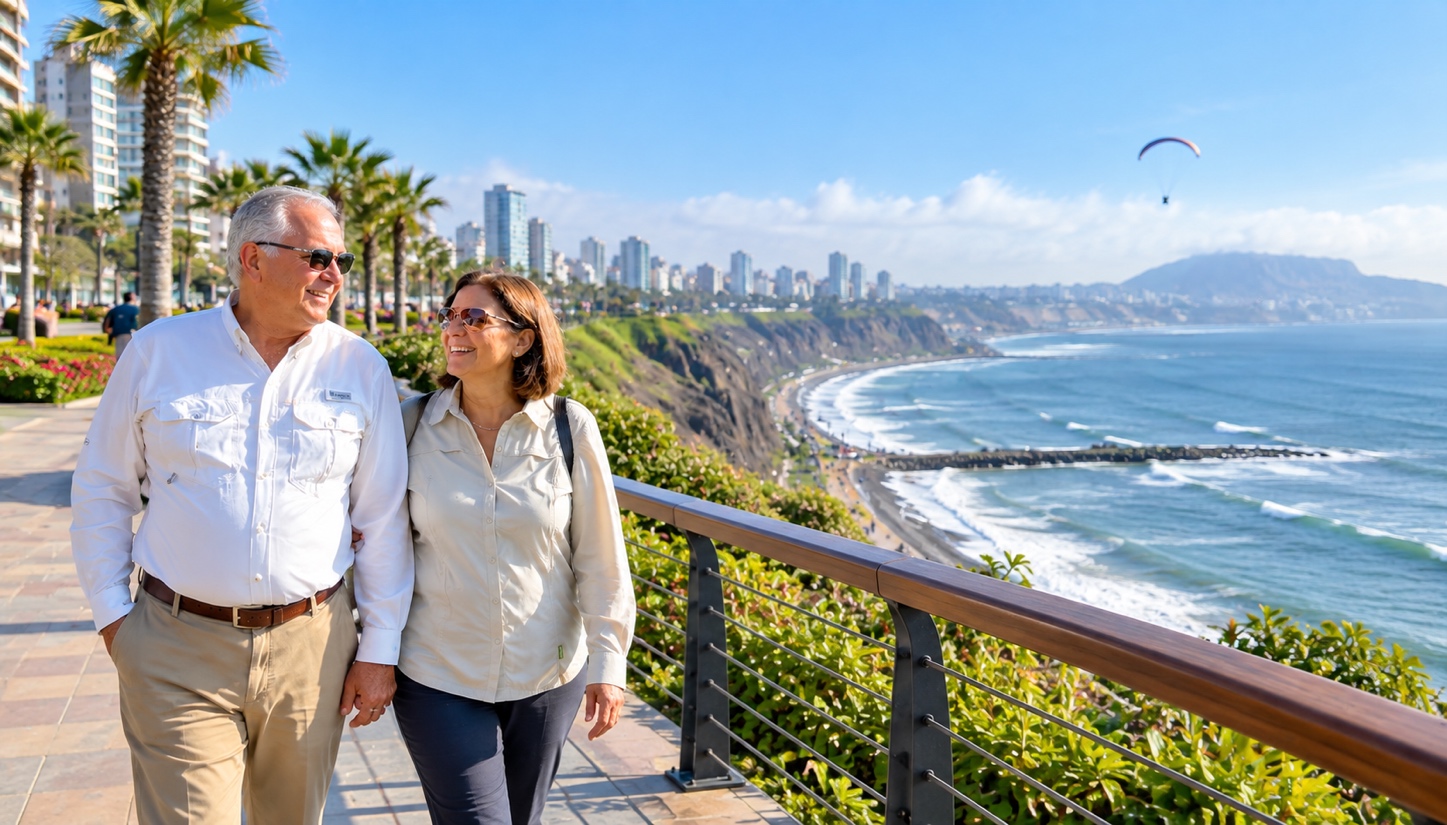
Beginning in Lima gave us time to rest and enjoy Peru before continuing into the Andes.
We walked through Barranco, enjoyed fresh ceviche at a small café and found ourselves laughing like we used to decades ago. Following our guide’s advice, we also visited the Larco Museum—and it turned out to be an extraordinary recommendation.
Walking through 7,000 years of Peruvian history and culture was deeply moving, and perhaps the most beautiful introduction we could have imagined to everything we would discover in the days ahead.
Those two days in Lima did not feel like time lost. Quite the opposite. They felt like the beginning of the journey.
The Sacred Valley: A Gentle Way to Acclimatize
Early the following morning, we flew to Cusco. But here was the key: we didn’t stay there.
Our guide met us at the airport with a warm smile. “Today, we go to the Sacred Valley,” he said.
Instead of immediately spending our first night in the higher city of Cusco, we continued toward the Sacred Valley and descended to Ollantaytambo, approximately 2,792 meters (9,160 feet) above sea level.
The difference was not something dramatic that we could immediately measure. It was something we felt.
The air was cool and clean. Mountains surrounded us, and ancient Inca terraces climbed the slopes above the valley. Suddenly, there was no reason to hurry.
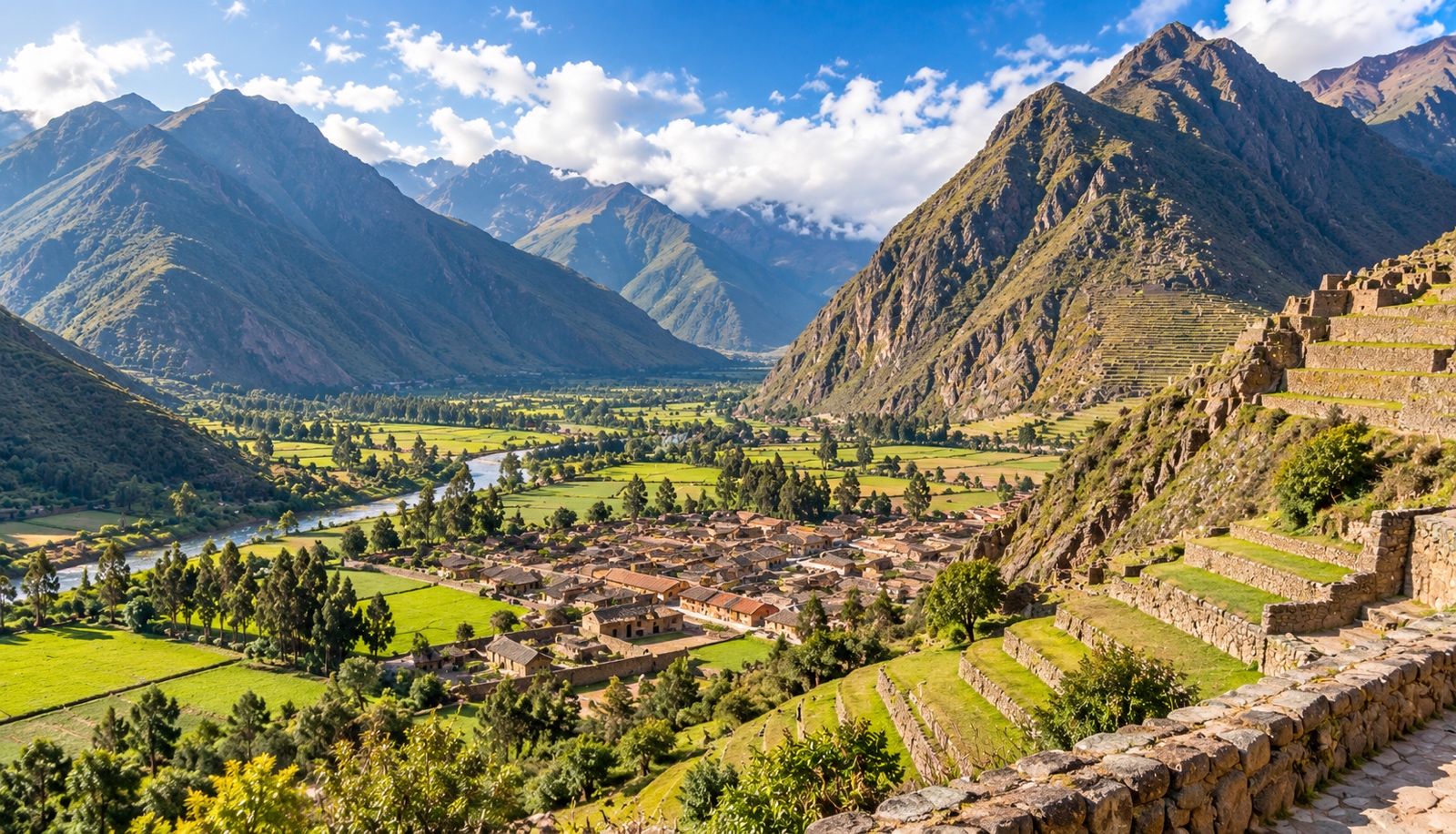
The Sacred Valley gave us a gentler introduction to the elevations of the Peruvian Andes.
Among Inca terraces and cobblestone alleys, we walked slowly, breathed deeply and allowed ourselves to experience the valley at its own pace.
There was no checklist, no race against the clock, no attempt to see Peru in the shortest possible number of days.
We were beginning to understand something about traveling through the Andes: the landscape sets the rhythm. And perhaps we needed to listen to it.
Machu Picchu After Acclimatizing in the Sacred Valley
By the time we continued toward Machu Picchu, we felt ready.
We boarded the train in Ollantaytambo and followed the Urubamba River as the landscape changed around us. The mountains grew steeper, the vegetation became greener, and somewhere ahead was the place we had dreamed about for years.
Machu Picchu.
When we arrived in Aguas Calientes, we felt energized rather than drained. The following morning, we entered Machu Picchu with our reserved circuit and private guide.
And then came the moment we will never forget.
The mountains opened before us. There it was.
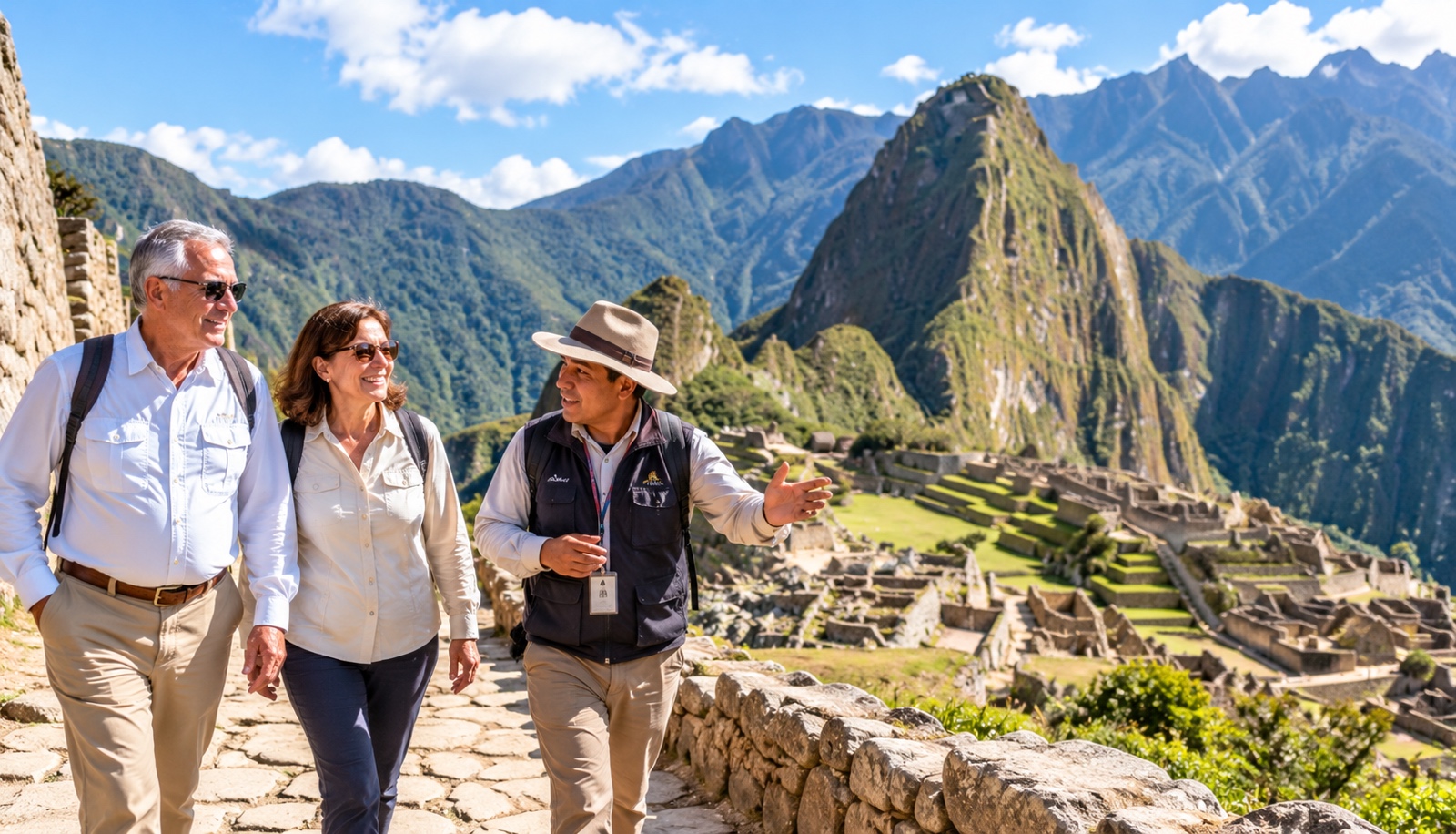
By the time we reached Machu Picchu, we felt ready to enjoy the experience we had dreamed about for years.
We stood quietly for a moment. We had imagined this scene so many times before leaving home and wondered whether the altitude would make the experience difficult, whether we would become exhausted or whether our age might somehow limit what we could enjoy.
Instead, we felt something completely different: awe.
Our guide seemed to know every stone like an old friend, and we followed him through terraces, temples and pathways that had survived centuries. We stopped whenever we wanted. We listened, looked and breathed.
And we realized that getting here comfortably had become part of the experience itself.
Visiting Cusco After Gradual Acclimatization
After Machu Picchu, we returned to the Sacred Valley and explored Pisac, Maras and Moray, gradually becoming more comfortable with the elevations of the Andes.
By then, something had changed. The mountains no longer felt intimidating. They felt like home.
Only after those experiences did we continue to Cusco. The city sits considerably higher than the Sacred Valley, and we could certainly feel the difference when we arrived.
So once again, we didn’t rush. We walked slowly, stopped when we wanted and allowed Cusco to reveal itself one street at a time.
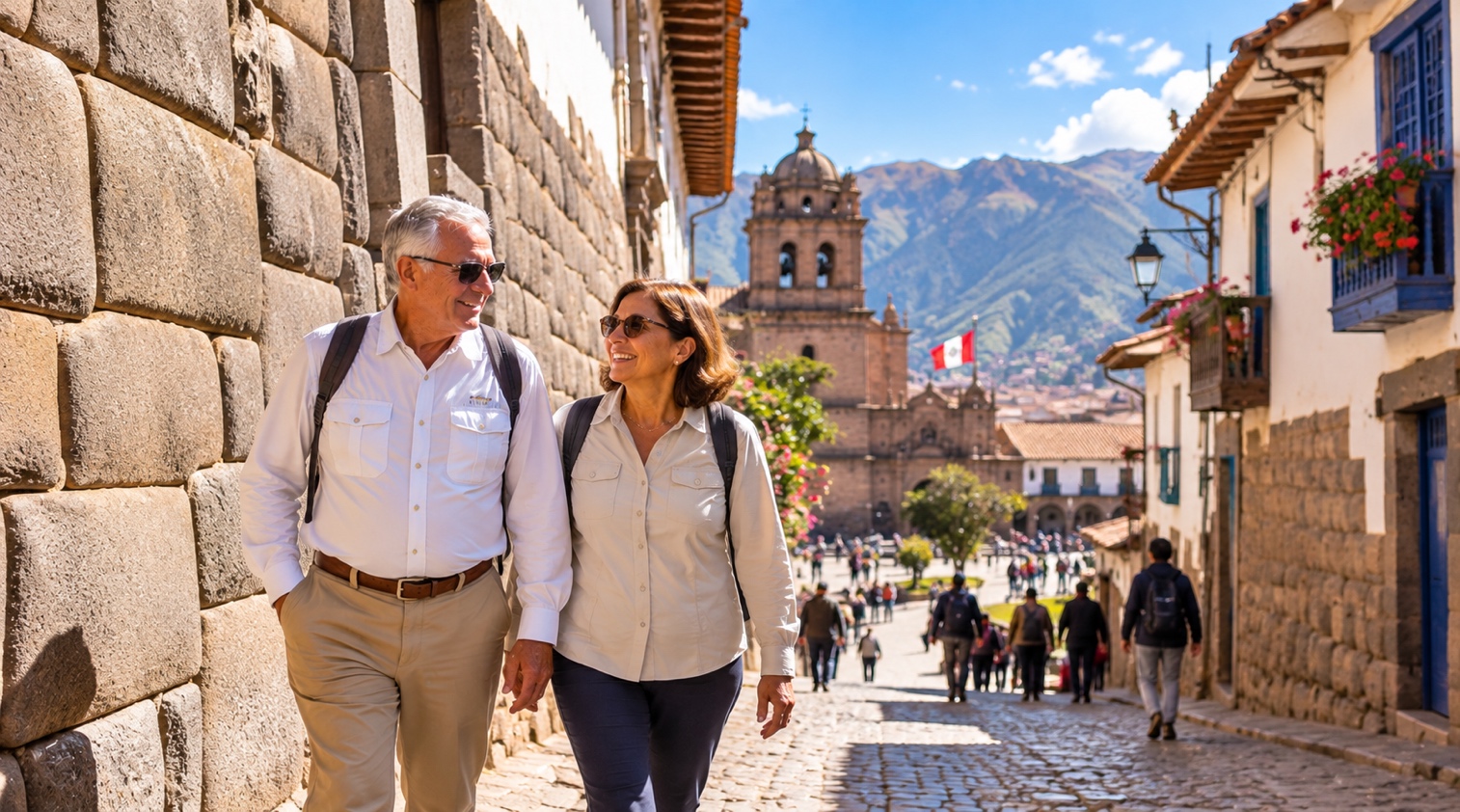
Cusco came later in our journey, after several days experiencing the Andes at a gentler pace.
We wandered through narrow streets where Inca stone walls still support colonial buildings and sat in plazas simply watching everyday life unfold around us.
Because we were no longer thinking constantly about altitude, we could concentrate on what we had actually come to Peru to discover: its people, history, food, landscapes and extraordinary culture.
That may have been one of the greatest gifts of taking our time. We weren’t simply preparing ourselves for Cusco. We were learning how to travel differently.
What We Learned About Altitude Sickness in Peru
If this journey taught us one thing, it is that the Andes don’t need to be conquered. They need to be respected.
We were fortunate. We felt well throughout our journey and did not need medication for altitude sickness. But everyone responds differently to altitude, and our experience cannot predict how another traveler will react.
What we can say is that we were very glad we had chosen a thoughtfully paced itinerary. We rested in Lima, experienced the Sacred Valley before staying in higher Cusco, gave ourselves time and, most importantly, listened to our bodies.
At 71, we returned home not thinking about the things our age prevented us from doing.
We were thinking about everything we had just done.
And we’re already dreaming about the next adventure.
The Andes don’t reward speed. They reward respect.