
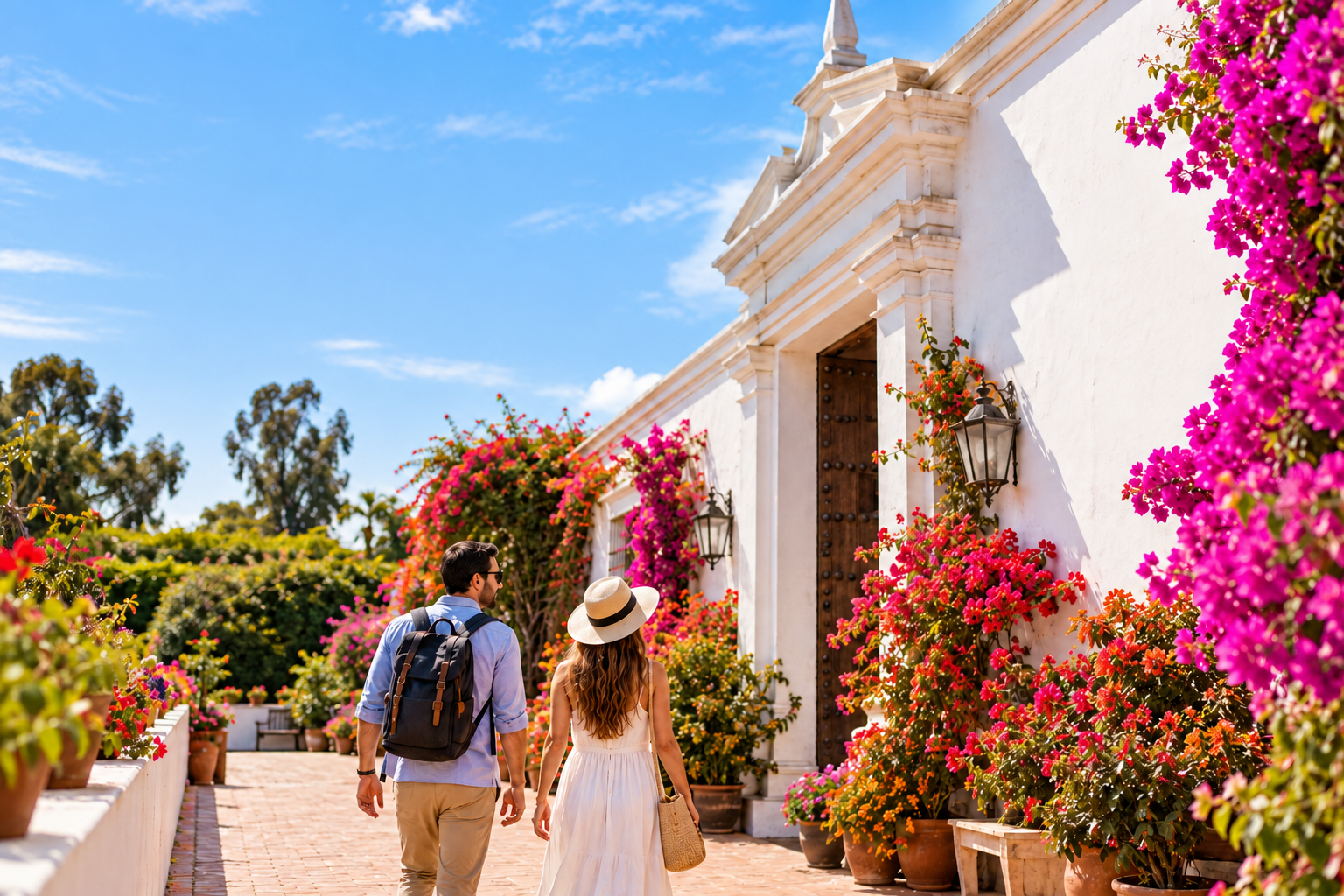

There are places you visit because they are famous. And there are places that quietly change the way you understand everything that comes afterward.
Museo Larco is one of those places.
Hidden behind flower-covered walls in Lima's Pueblo Libre district, this remarkable museum offers something especially valuable at the beginning of a journey through Peru: a chance to discover the civilizations, beliefs, artistry and human stories that existed here long before the Inca.
And when the museum visit ends, the experience doesn't have to.
Step outside into gardens overflowing with bougainvillea, find a table surrounded by flowers, order a pisco sour and let an afternoon of ancient history turn naturally into a memorable dinner.
It is one of our favorite ways to begin discovering Peru.
Before Machu Picchu, Discover the Story Behind Peru
When travelers think of ancient Peru, Machu Picchu usually comes first.
But Peru's story began thousands of years before the Inca built their extraordinary city in the Andes.
Chavín, Nazca, Moche, Wari, Chimú and many other civilizations flourished across deserts, mountains and valleys. They created sophisticated societies, developed remarkable artistic traditions and left behind objects that still speak to us centuries later.
Museo Larco brings those worlds together.
Walking through its collection is like traveling across thousands of years of Peruvian history before you ever board the train to Machu Picchu. Suddenly, the places you will visit later begin to acquire a deeper meaning.
That is why we especially love visiting Museo Larco near the beginning of a journey.
It is like reading the prologue before beginning a great novel.
Five Thousand Years of Peru, Inside a Colonial Mansion
Part of Museo Larco's charm is that it doesn't feel like a monumental institutional museum.
Its collection is housed inside a beautiful colonial mansion surrounded by colorful gardens. The atmosphere feels intimate, almost as though someone has invited you into a private home to share an extraordinary collection accumulated over generations.
And in many ways, that is how its story began.
Rafael Larco Hoyle started with approximately 600 ceramic pieces inherited from his uncle, Víctor Larco Herrera. What began as fascination grew into a lifelong dedication to studying Peru's ancient cultures and organizing their history, eventually creating one of the country's most important archaeological collections.
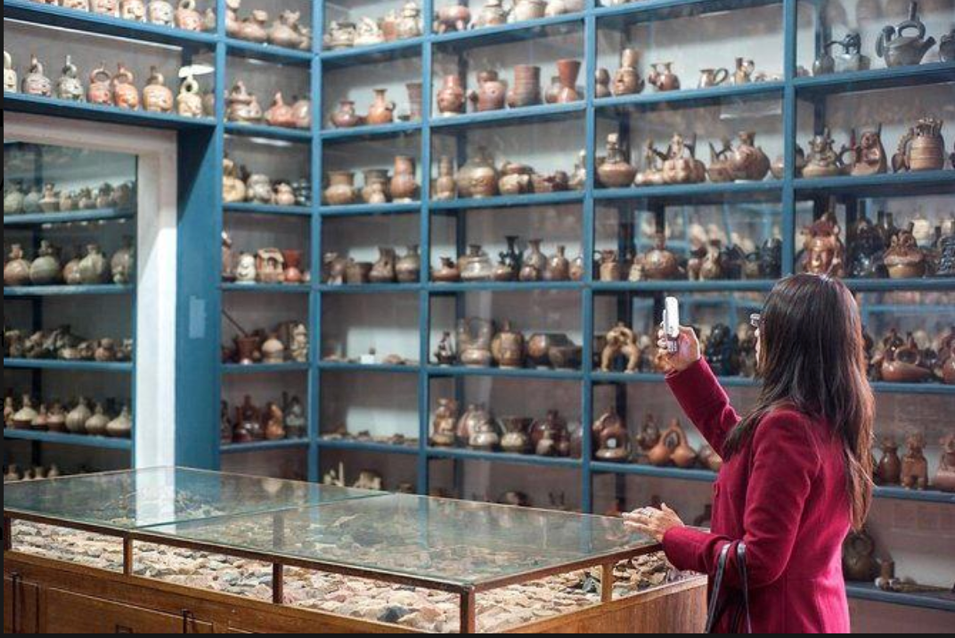
Today, walking through Museo Larco feels like moving through time.
But you don't need to memorize names and dates to appreciate it.
Sometimes one object is enough.
Faces, Ceramics and Stories That Make Ancient Peru Feel Human
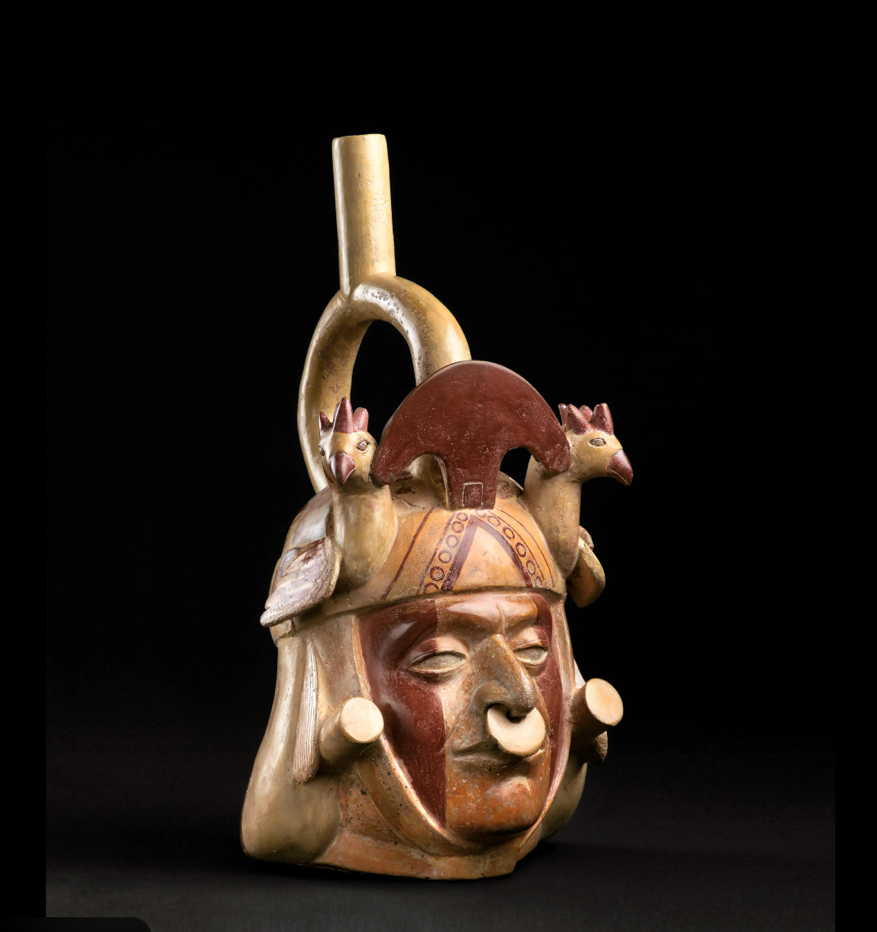
One of the most fascinating moments comes when you encounter the Moche portrait vessels.
These are not anonymous representations. Their faces have personality—an older man, a warrior, someone serious, someone contemplative. Wrinkles, expressions and individual features were modeled into clay centuries ago with astonishing realism.
You may find yourself standing in front of one of these faces longer than expected.
For a moment, ancient Peru stops feeling ancient. You are looking at another human being.
Elsewhere, colorful Nazca ceramics, sophisticated textiles and precious metalwork reveal civilizations with very different ways of expressing beauty, power and spirituality.
And then there is one of Museo Larco's most famous collections: the Erotic Gallery.
The ceramics can surprise modern visitors, but they offer a fascinating window into how ancient Peruvian societies understood sexuality, fertility, life and the relationship between the physical and spiritual worlds.
By the time you leave the galleries, something has changed.
These civilizations may have disappeared centuries ago, but many of the emotions represented in their art feel remarkably familiar.
Step Outside, and the Experience Changes Completely
After spending time surrounded by ancient ceramics, textiles and gold, open the door and step outside.
Suddenly, the mood changes.
Bougainvillea tumbles across white walls, flowers surround the pathways and the colonial mansion rises behind the gardens.
Lima suddenly feels very far away.
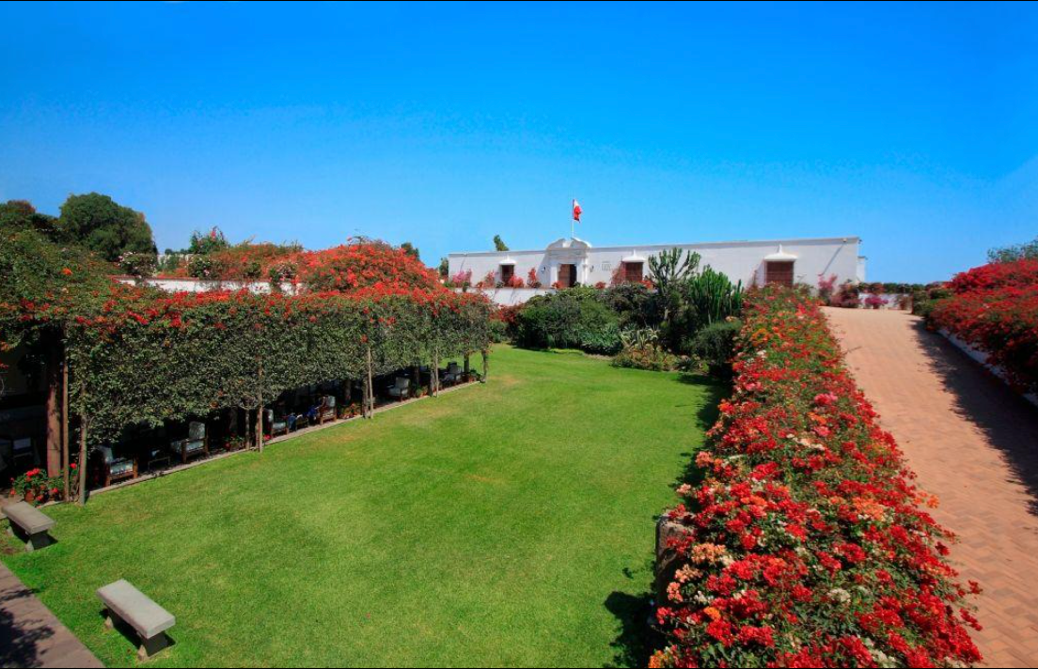
This transition is one of the things that makes Museo Larco special. The gardens aren't simply decoration around the museum. They give you somewhere to slow down after absorbing thousands of years of history—to talk about what surprised you, take photographs or simply sit among the flowers for a while.
And there is no reason to leave yet.
Because another very Peruvian experience is waiting just a few steps away.
Dinner in the Gardens: When History Becomes an Experience
Imagine finishing your museum visit just as afternoon begins to turn into evening.
You find a table overlooking the gardens. Perhaps you start with a pisco sour and talk about the pieces that stayed with you.
Then dinner arrives.
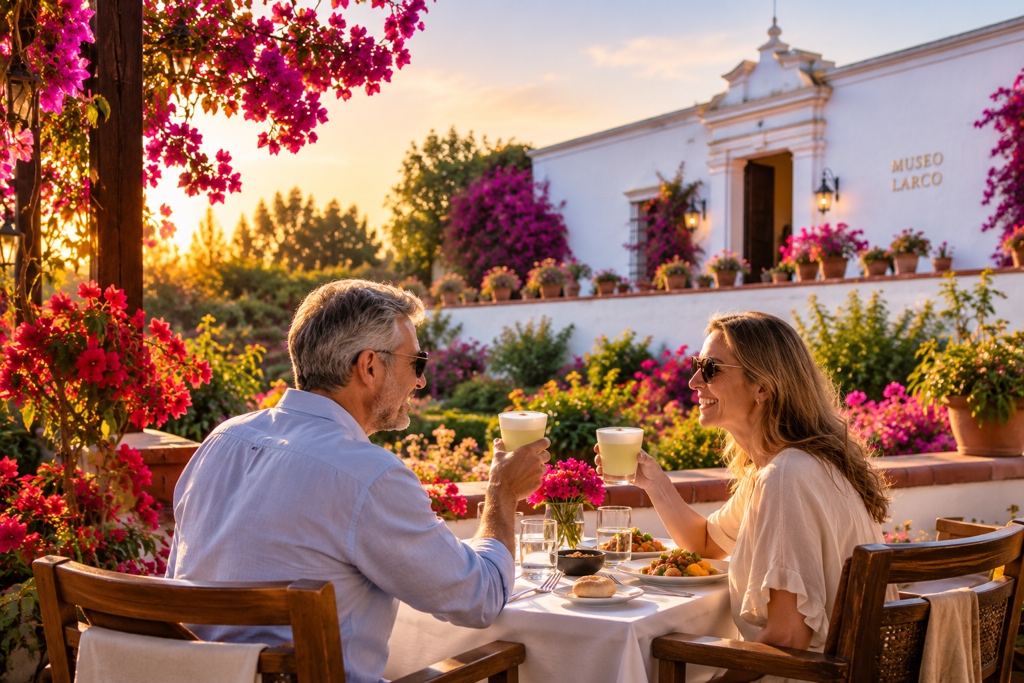
Peruvian cuisine feels like a natural continuation of the experience: ingredients and culinary traditions connecting today's Peru with the same land and cultures you have just spent the afternoon discovering.
Causa. Seafood. Lomo saltado. Purple corn.
Ancient ingredients and modern influences sharing the same table.
As daylight fades and the gardens begin to glow around you, time seems to slow.
Perhaps that is what makes dinner here so memorable.
It doesn't feel like visiting a museum and then going somewhere else to eat.
It feels like the same story continuing.
A Beautiful Prelude to the Journey Ahead
A few days later, you may be walking through the Sacred Valley. You may watch Quechua weavers working with patterns passed through generations, stand beneath the enormous stone walls of Sacsayhuamán or finally arrive at Machu Picchu.
And something will be different.
You will recognize connections.
The textiles will have a history. The ceramics will have ancestors. And the extraordinary achievements of the Inca will become part of a much longer story rather than its beginning.
That is why we don't think of Museo Larco simply as another attraction to include while staying in Lima.
We think of it as one of the most beautiful ways to begin understanding Peru.
And ending that first encounter beneath the bougainvillea, sharing dinner and a pisco sour with someone you love?
That's a pretty wonderful way to begin a journey.