
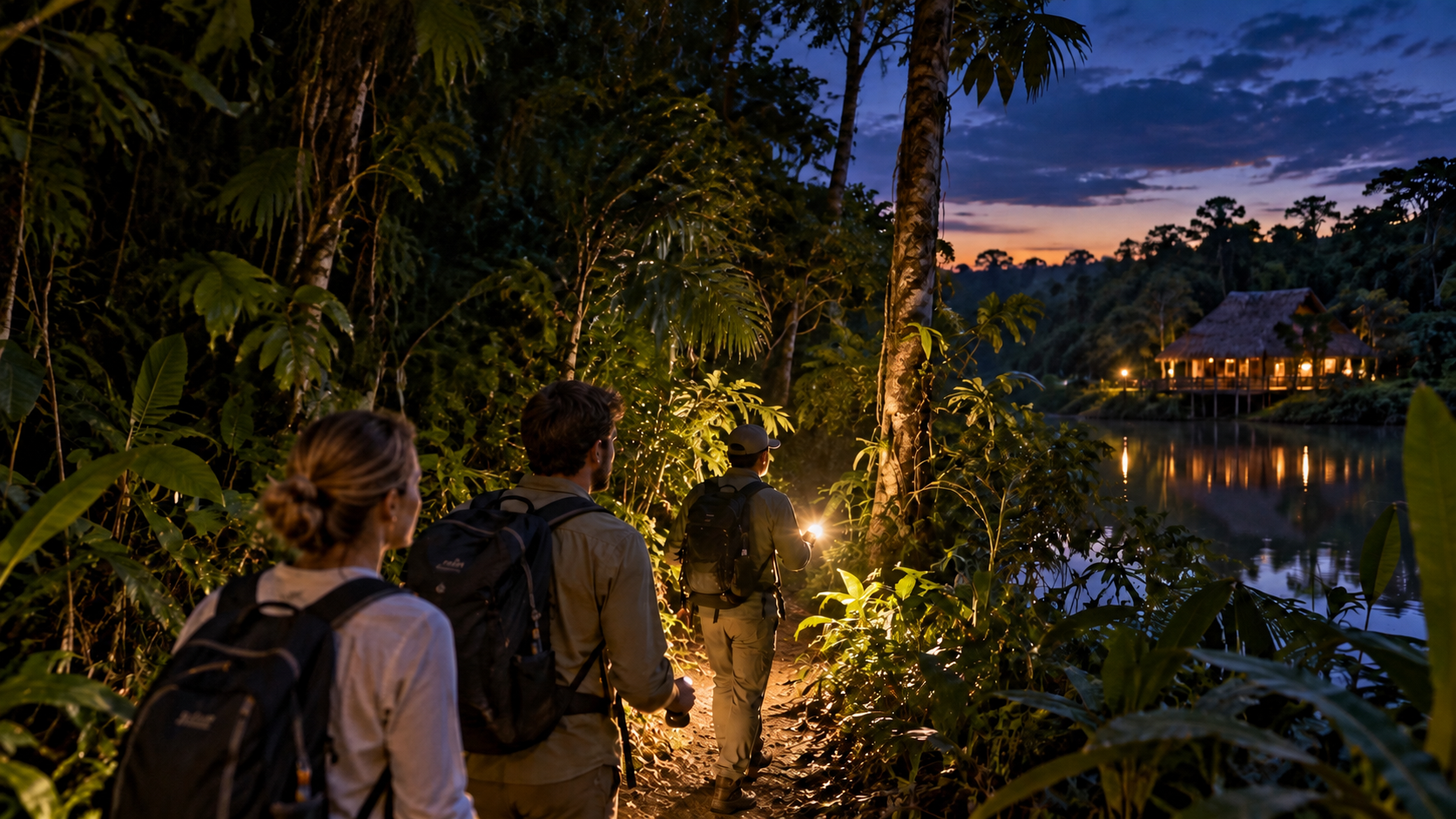

Your guide suddenly stops. “Turn off your flashlight.” For a moment, there is complete darkness. Then you begin to hear it—a frog somewhere beneath the leaves, insects calling from the canopy, something moving through branches you cannot see, the distant splash of water.
During the day, the Amazon overwhelms you with color: endless shades of green, brilliant birds, butterflies and sunlight filtering through the canopy. At night, almost all of that disappears. And something extraordinary happens. You begin to discover the rainforest with your other senses.
The Amazon has not gone to sleep. It has simply changed shifts.
When Daylight Disappears, Another Amazon Appears
Walk the same trail in the afternoon and again after dinner, and it can feel like two completely different places. As dusk settles over the forest, the birds that dominated the daytime soundscape grow quieter. Frogs, insects and nocturnal creatures begin to take their place. The humid air feels different, your field of vision becomes smaller, and suddenly your flashlight becomes your window into the forest.
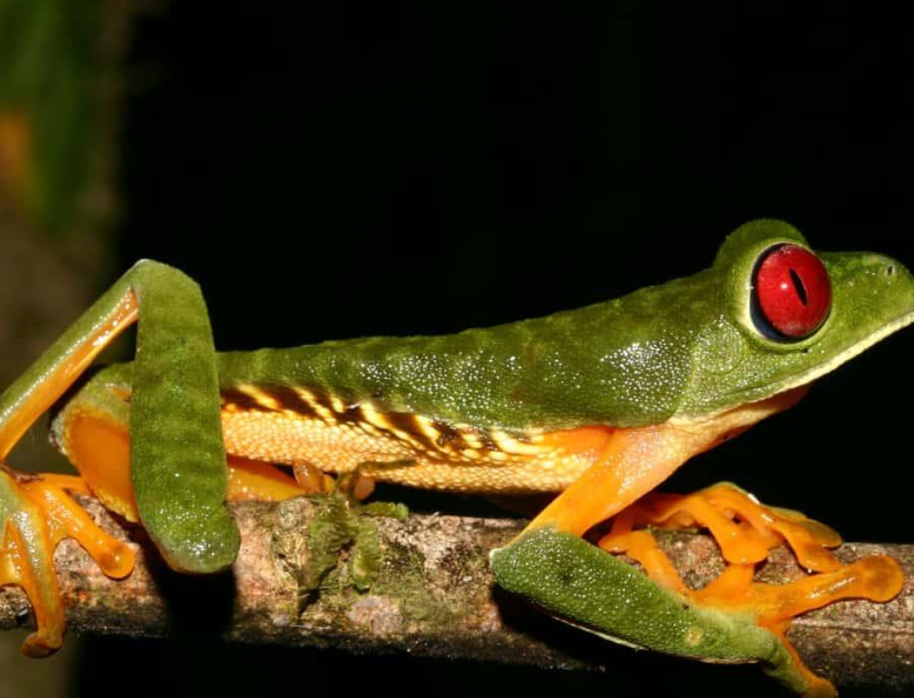
You follow your naturalist guide along a narrow trail, illuminating leaves, tree trunks and branches one small section at a time. But this experience isn't necessarily about finding the biggest animal. Some of the most fascinating discoveries can be remarkably small: a brightly colored frog resting on a leaf, a spider perfectly positioned beside its web, or an insect whose camouflage made it invisible only seconds earlier. Frogs, hunting spiders, tarantulas, caimans and fireflies may all become part of the experience—but there are no guarantees.
And that's precisely part of the excitement. You never know what the next beam of light will reveal.
Follow the Beam of Your Flashlight
A good Amazon guide seems to see things that simply don't exist to the rest of us. You may be staring at exactly the same tree. You see leaves. Your guide sees a tiny movement, a shape that doesn't quite belong, or the faintest reflection in the darkness. That ability changes a night walk completely.
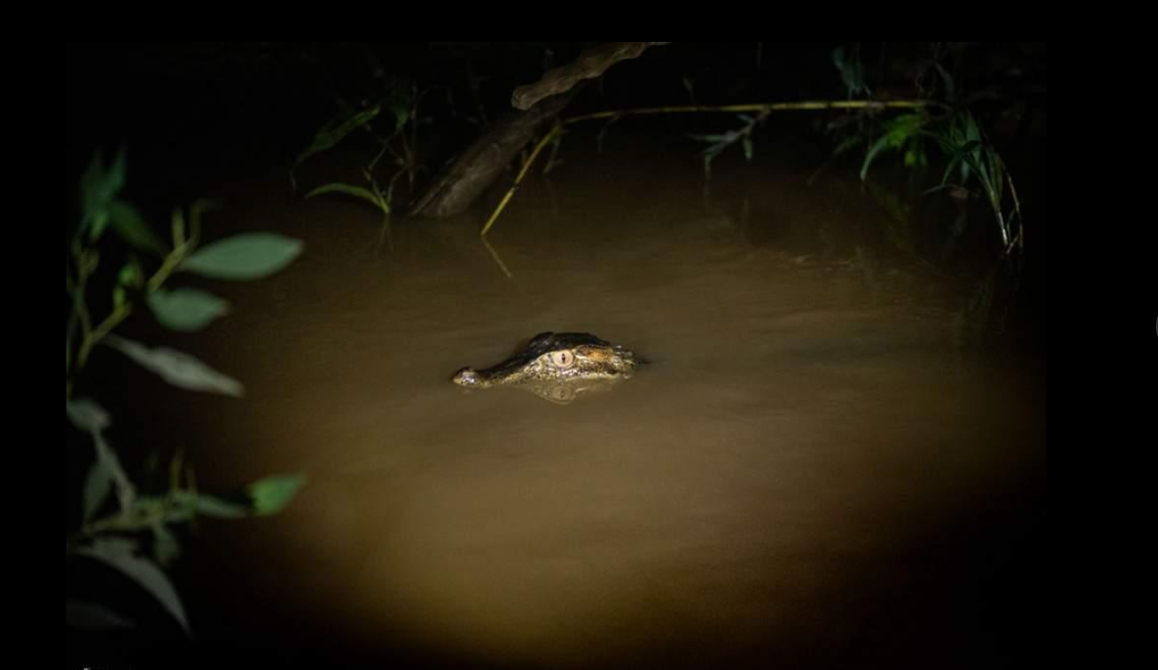
One of the most memorable examples happens near the water. Sweep a flashlight across the darkness and sometimes two tiny points of reflected light appear just above the surface. Caiman eyes. For an instant, you see the reflection before you see the animal. Then your guide points out the outline of a caiman, almost perfectly concealed in the darkness.
Moments like this change the way you walk through the rainforest. You stop searching for something spectacular in the distance and start paying attention to what is right beside you. TRAVELER'S SECRET Rain Doesn't Necessarily Ruin a Night Walk. In many destinations, rain can feel like bad luck. The Amazon plays by different rules. Moist conditions can increase the activity of frogs and other amphibians, turning a damp evening into a surprisingly rewarding opportunity for wildlife observation. Trails may become muddier, but the forest can also become noticeably more active. So when you hear rain outside your lodge, don’t immediately assume your evening has been spoiled. The forest may simply be preparing a different show.
Now Turn Off the Light
Perhaps the most powerful moment of a nocturnal jungle walk is also the simplest. Your guide asks everyone to stop. Then the flashlights go off.
Complete darkness. At first, there may be a little nervous laughter. Then everyone becomes quiet—and you listen. Leaves move somewhere above you. Frogs call from different directions. A branch cracks. Water moves nearby. Perhaps you hear something you cannot identify at all.
Without the lights, sounds that seemed insignificant only moments earlier suddenly become part of an enormous living landscape. And your perspective begins to change. During the day, you feel as though you are looking at the rainforest. In complete darkness, you feel as though you are inside it.
For Children, the Jungle Becomes a Living Classroom
For a child, a nocturnal walk can be far more memorable than another explanation from a textbook. There is mystery, a little apprehension—and then discovery.
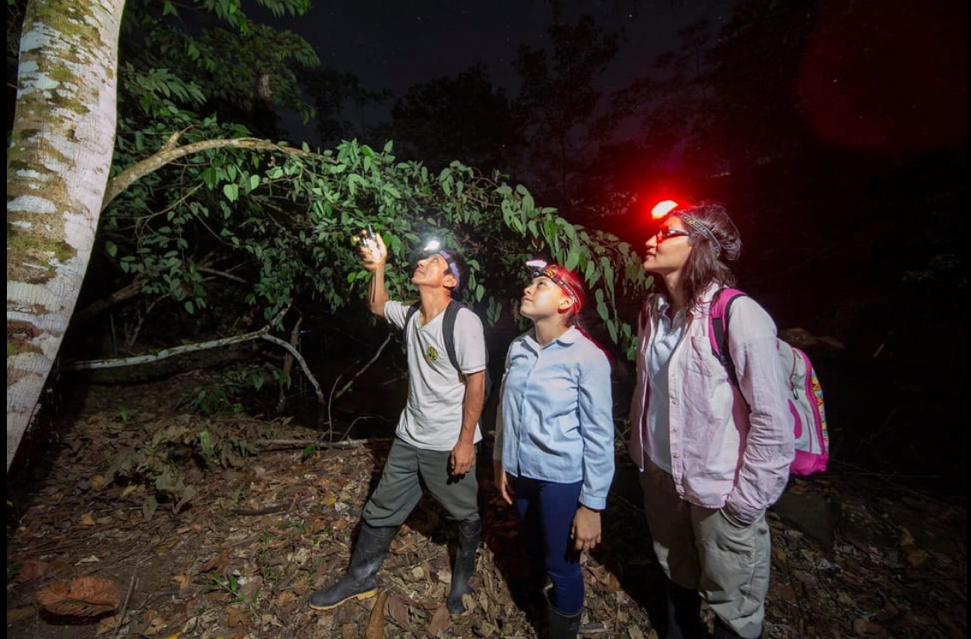
Instead of simply learning that frogs, insects and spiders are important parts of an ecosystem, children actually search for them alongside a naturalist guide. They learn to walk quietly, observe without disturbing and resist the temptation to touch everything they see. Perhaps most importantly, they discover that creatures that initially seem frightening can become fascinating once someone helps them understand what they’re looking at.
For families, this combination of curiosity, respect for nature and discovery can make a night walk particularly rewarding. Of course, suitability depends on the child’s age, interests and the particular lodge and trail. But for the right young traveler, the Amazon after dark may become the science class they remember for the rest of their life.
Iquitos or Puerto Maldonado: Two Gateways to the Amazon Night
There isn’t just one way to experience the Peruvian Amazon. Iquitos, in northern Peru, opens the door to an Amazon shaped by enormous rivers. The city cannot be reached by road from the rest of Peru, so travelers arrive primarily by air or river before continuing to jungle lodges or river journeys deeper into the rainforest. Here, nocturnal walks can become part of a broader experience centered around the rivers, wildlife and extraordinary biodiversity of the Amazon basin.
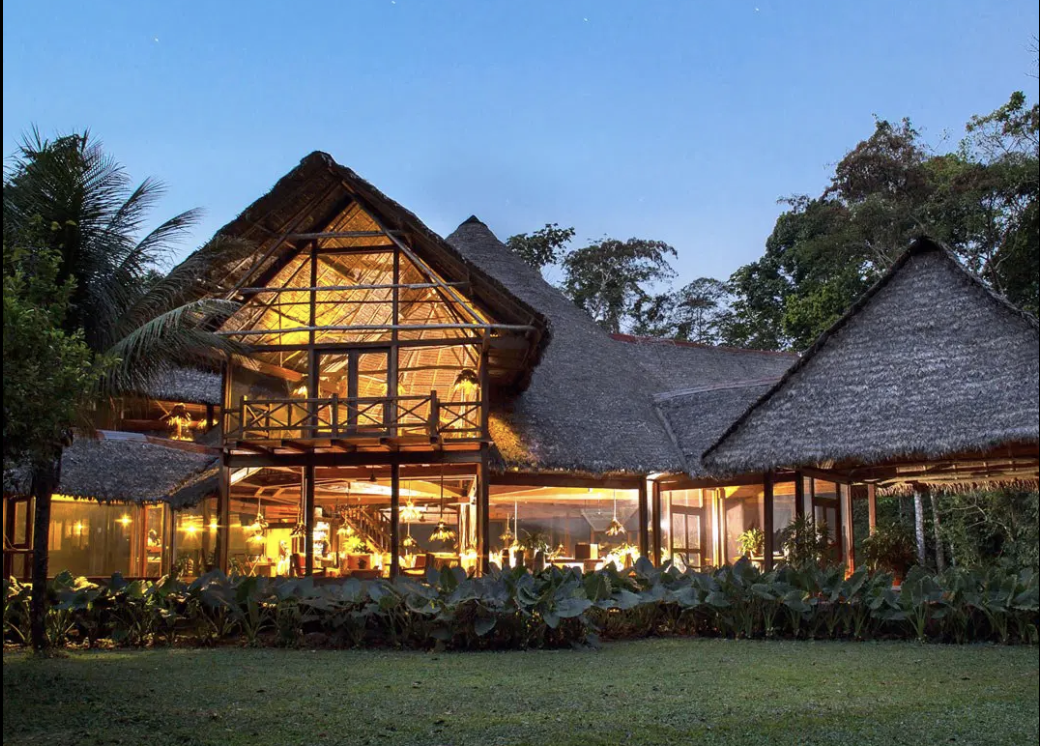
Puerto Maldonado, in southeastern Peru, offers a different connection to the rainforest. For travelers already exploring Cusco, the Sacred Valley and Machu Picchu, it creates a natural transition from the high Andes into the lowland Amazon. So, which is better?
That depends entirely on the journey you want to create. And for us, that’s a much more interesting question than simply asking which destination has the longest wildlife list.
The Amazon Night Changes the Way You Listen
Eventually, you return to your lodge. Your flashlight goes off and your shoes may be muddy. Perhaps you saw a tarantula. Perhaps a caiman. Perhaps an extraordinary frog no larger than your thumb. Or perhaps the most memorable part was something you never actually saw. A sound in the trees. Two eyes reflecting from the water. Or that moment in the middle of the forest when everyone turned off their lights and nobody spoke.
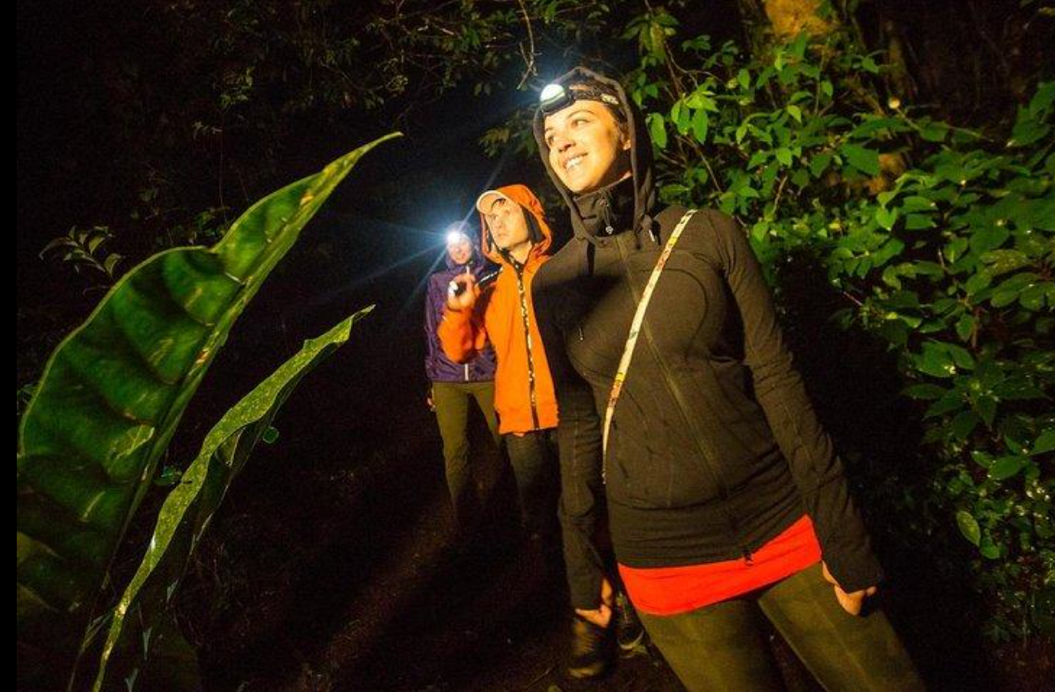
Darkness isn't emptiness, and silence isn't absence. After experiencing the Amazon at night, you understand why. The rainforest doesn't need you to see everything. Sometimes it simply asks you to listen. READY TO DISCOVER THE AMAZON AFTER DARK? The Peruvian Amazon can be adventurous, comfortable, educational and deeply surprising—all in the same journey. We can help you choose between Iquitos and Puerto Maldonado, select the lodge that best matches your travel style, and combine your Amazon experience naturally with Cusco, the Sacred Valley, Machu Picchu or the rest of Peru. TALK TO YOUR DEDICATED TRAVEL ADVISOR Personal recommendations · No obligation to book