

The first time we traveled to Iquitos was in 2004. Rosita and I were traveling with our daughter Pati and our four-year-old granddaughter, Marianita. Twelve years later, Rosita and I returned alone. They were two very different journeys. In 2004, I remember the excitement of discovering everything through the eyes of a child: the animals, the dances, the children living along the river, the blowgun, the piranhas. In 2016, perhaps we traveled differently. We noticed other things—the unexpected architecture of Iquitos, an old boat hidden among the vegetation and transformed into a restaurant, the enormous landscapes beyond the city. And the river. Always the river. Twelve years have passed. We had changed. But the Amazon still seemed to organize everything around its water.
Our First Amazon, Through a Child's Eyes
Traveling with a four-year-old changes the way you see a destination. Adults arrive with expectations. Children simply arrive with curiosity. In 2004, Marianita was four, and everything seemed capable of surprising her. The river was enormous. The boats were different. The animals were everywhere. But some of my strongest memories came when we met children living in communities along the Amazon.
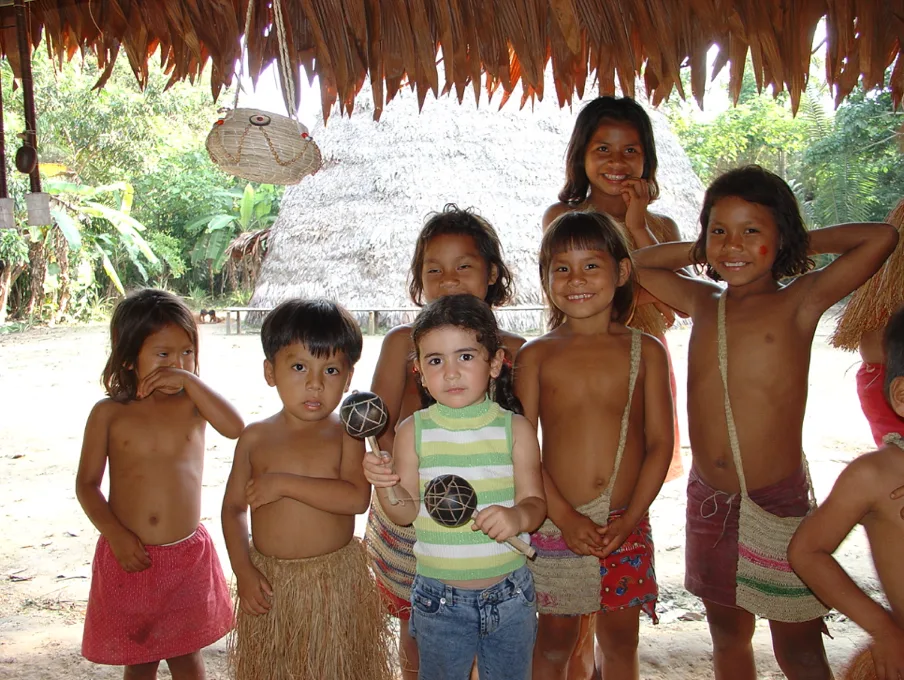
Their world was very different from Marianita's. She was growing up in Lima; they were growing up surrounded by river and forest, in communities where boats were part of daily transportation and nature was never far away. At first, the differences seemed enormous. Then the children met. They smiled, became curious about one another and played.
In one of my favorite photographs, Marianita stands among a group of Amazonian children, holding traditional rattles. Some look at the camera. Others look at her. Marianita, right in the middle, seems to belong to both worlds for that brief moment. Looking at that photograph today, I don't think first about their differences. I notice how quickly those differences seemed to disappear. As adults, we often travel hoping to understand another culture. Children sometimes accomplish it without asking a single question.
Culture Is Different When You Join In
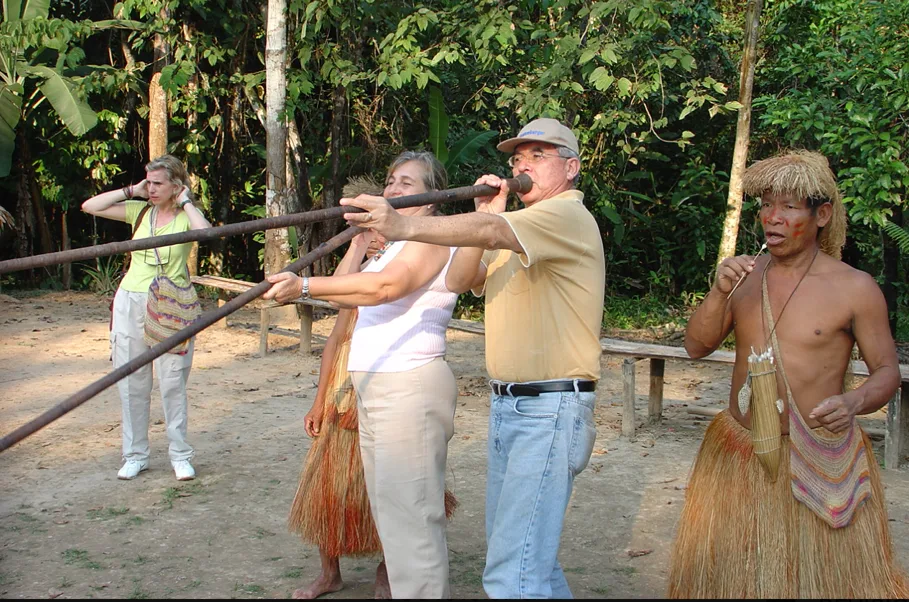
There were dances, traditional clothing, music and traditions that belonged to a world very different from ours. But we didn't remain spectators for very long. At some point, someone handed me a blowgun. Watching an experienced person use one makes it look remarkably simple. Then you try it yourself.
Suddenly, the blowgun seems much longer—and the target much smaller. I aimed. I blew. I will leave the accuracy of the result out of this story.
Rosita was beside me, everyone was laughing, and I was laughing too. The photograph captured exactly what I remember: not a demonstration, but a moment in which we had stopped watching and started participating. Perhaps imperfectly. But enthusiastically. And once you participate, the memory becomes personal.
The Amazon Was Full of Surprises
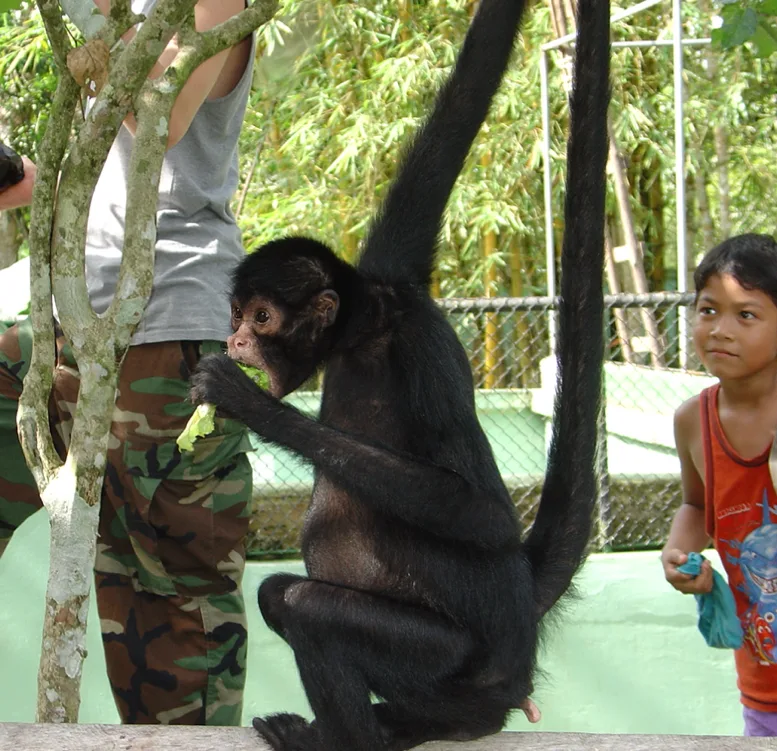
Of course, Marianita wasn't the only one fascinated by the animals. We all were. There were monkeys, tropical birds, a sloth and snakes—some of them considerably closer to us than I would normally expect a snake to be. Those photographs make us smile today. But they also tell another story.
Travel changes. In 2004, holding an animal or having one placed on a visitor's shoulders was commonly presented as part of an Amazon experience. We participated because that was how many of these encounters were offered at the time. Today, we understand wildlife differently. And I think that is a good thing.
The wonder remains, but increasingly, the most rewarding wildlife encounter is one in which we can observe an animal behaving naturally, without needing to touch, hold or disturb it. Our photographs capture a moment in our family's history, but they also remind us how our understanding of responsible travel has evolved. Travel doesn't only show us how other worlds live. Sometimes it teaches us to reconsider how we interact with them.
The Piranha That Became Lunch
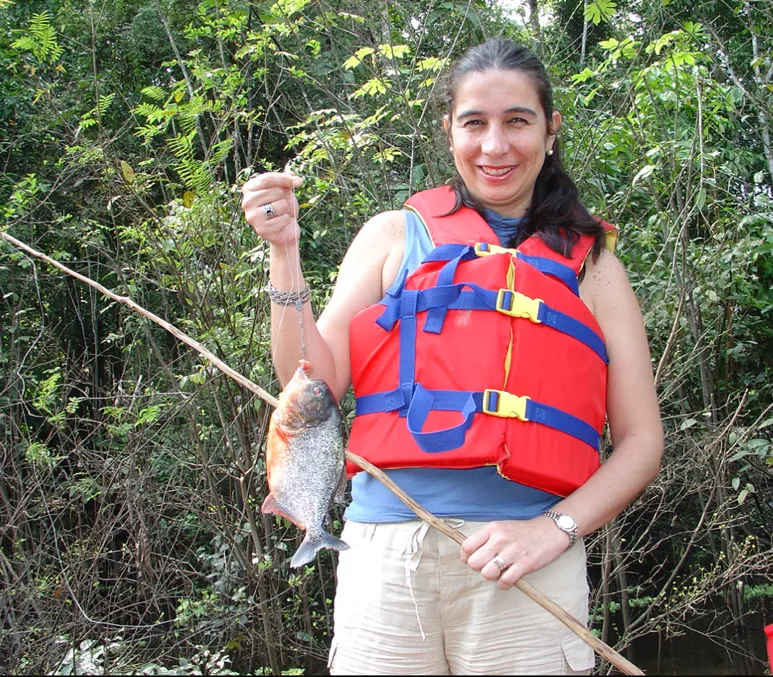
Then there were the piranhas. Their reputation, of course, arrived long before we did, so going fishing for them seemed irresistible. Pati caught one. There she is in one of our photographs, sitting in her life jacket and proudly displaying the piranha she had just pulled from the water.
That would already have been enough for a family story. But the piranha made another appearance later. This time, cooked. The fish we had pulled from the Amazon became part of our meal. There was something wonderfully direct about the experience: river, fishing line, piranha, lunch.
I have eaten many more sophisticated meals since then. I remember very few of them as clearly. Sometimes what makes a meal unforgettable isn't the recipe. It is the story that happened before it reached the plate.
Twelve Years Later, We Returned With Different Eyes
In 2016, Rosita and I returned to Iquitos. This time there was no four-year-old traveling with us. No Marianita discovering everything for the first time. No Pati proudly holding her piranha. Just Rosita and me.
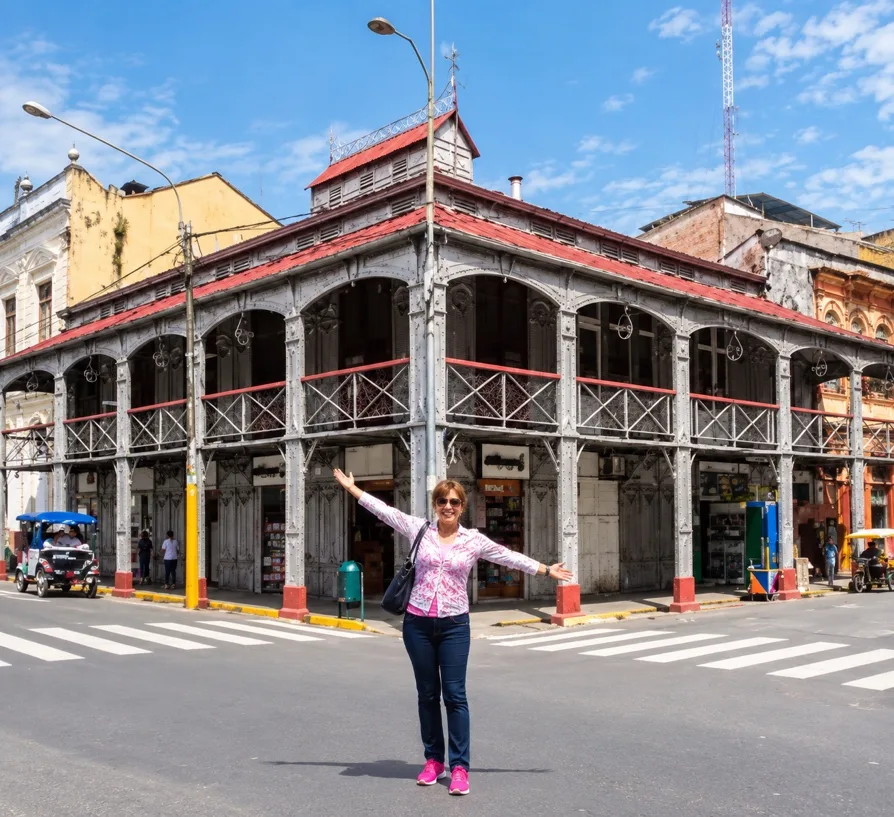
Perhaps because we were at a different moment in our lives, we began noticing things we had paid less attention to before. Iquitos itself fascinated us more. The city seemed to contain traces of another time, and one building in particular seemed almost impossible in the middle of the Amazon: the Casa de Fierro. Its iron columns, galleries and European appearance tell of the extraordinary period when the rubber boom connected this remote Amazonian city with fortunes, fashions and materials arriving from across the Atlantic. It is also known as the Casa Eiffel and has long been popularly associated with Gustave Eiffel. Yet researchers have questioned that attribution, tracing the prefabricated iron system instead to Belgian industrial production associated with Joseph Danly.
I liked the mystery almost as much as the building. Here we were in the heat of the Peruvian Amazon, looking at an iron structure that seemed to belong to another continent and another century. Rosita stood in front of it, smiling with her arms open. It was one of those moments when Iquitos reminded us that its surprises were not only hidden in the jungle.
A Boat That Wasn't Going Anywhere
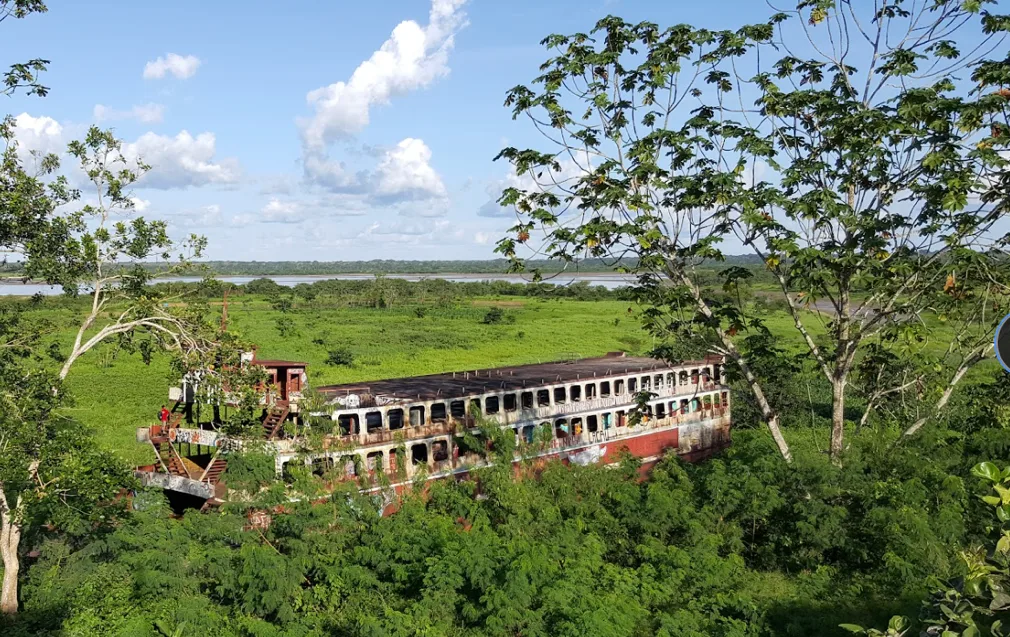
Then we encountered something completely different. An old boat. Except this boat wasn't on the river. It sat surrounded by vegetation, as though the jungle had slowly decided to reclaim it. And somehow, it had become a restaurant. From a distance, the enormous vessel looked almost surreal: decks, windows and traces of its former life emerging from a sea of green.
I loved it immediately. Perhaps because it contained so many of the contrasts that make Iquitos fascinating: a boat without water, a restaurant inside a vessel, something old given an entirely new purpose—and the jungle slowly growing around all of it.
There are places you remember because they are beautiful. Others you remember simply because you never expected to find them. This was one of those places.
The River, Always the River
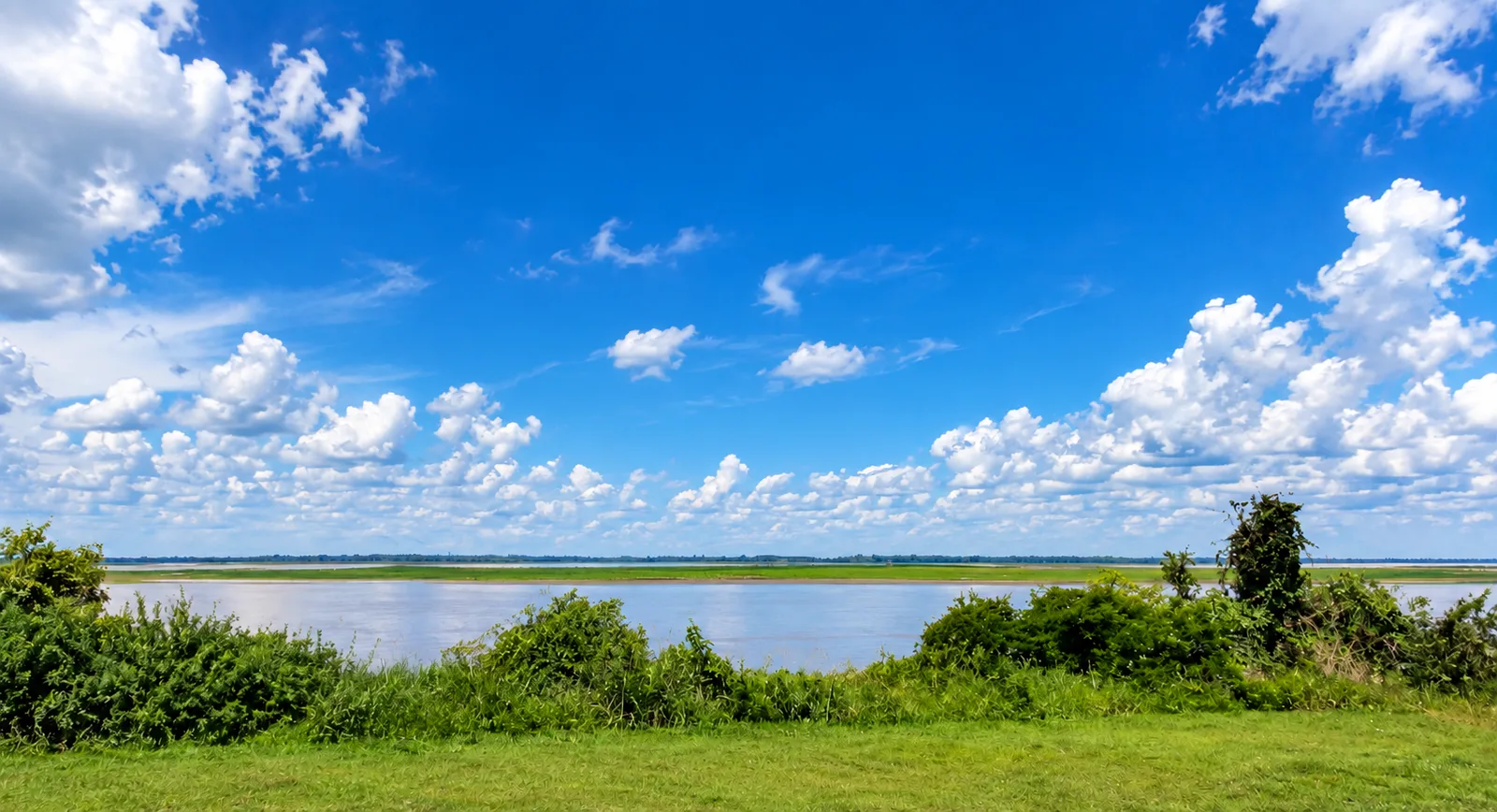
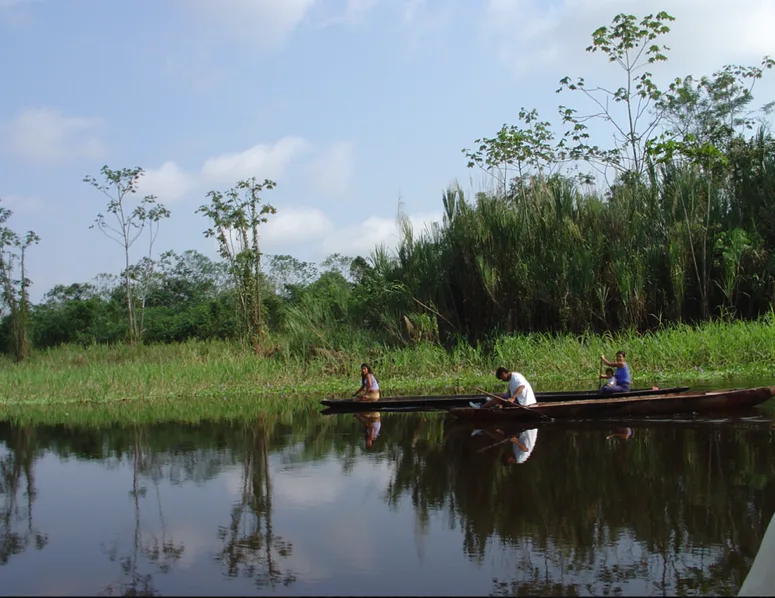
And then there was the river again. In one of our photographs from 2016, almost nothing is happening. No monkey, snake, dance or piranha. No family posing for the camera. Just an enormous sky filled with white clouds, a strip of green vegetation and water stretching toward the horizon. Perhaps that is why I like the photograph so much.
After two journeys, I had begun to understand that the river didn't need anything else to make it extraordinary. In 2004, the water carried us toward communities, animals and experiences that fascinated Marianita. In 2016, Rosita and I could simply stand and look at it. The river hadn't changed its role. We had changed the way we were looking at it.
That may be one of the gifts of returning to a destination years later. You think you are going back to see the same place. But you can't. Because you are no longer the same traveler.
Two Journeys, One Story
Twelve years separated those two journeys. In 2004, Iquitos was Marianita surrounded by Amazonian children. Pati proudly holding a piranha. Rosita sharing smiles with people we had only recently met. Traditional dances. Animals appearing unexpectedly close. And me discovering that using a blowgun was considerably easier to watch than to do. In 2016, it was different. Rosita and I had returned alone. We noticed the city more—its architecture, its stories, a mysterious iron house with a European past and an old boat hidden among the vegetation and transformed into something entirely unexpected.
Perhaps we noticed silence more too. But there was one thing connecting both journeys. The river. It was there when Marianita was four years old, and it was there when Rosita and I returned twelve years later. Boats crossed it. Children grew up beside it. Communities depended upon it. The forest seemed to begin and end with it. Looking at these photographs today, I realize that we didn't simply return to the same destination.
We returned to the same river as different travelers. And perhaps that is why Iquitos gave us two completely different journeys—and memories that somehow still belong to the same story. The children changed. We changed. The journey changed. And the river, always the river.