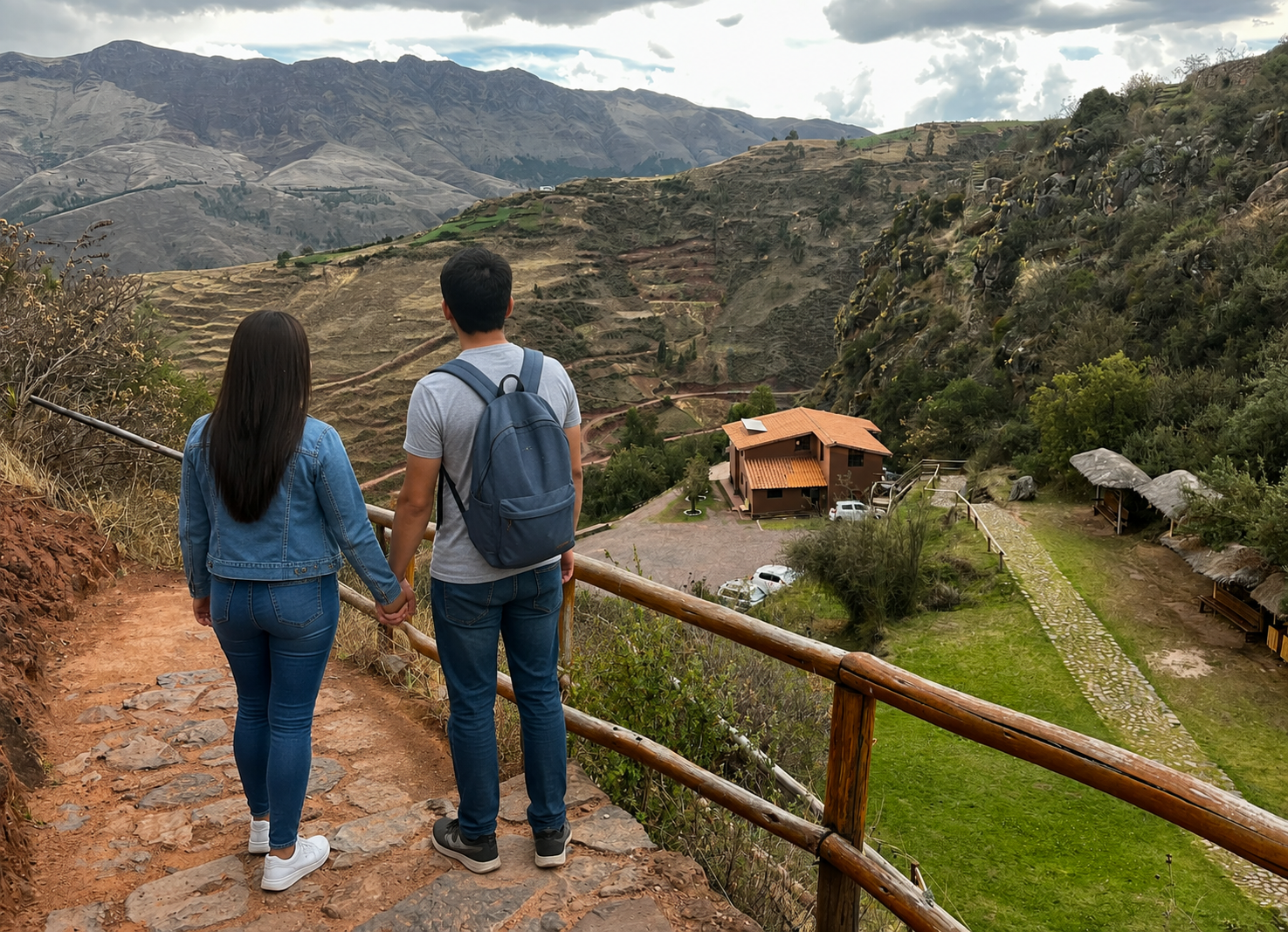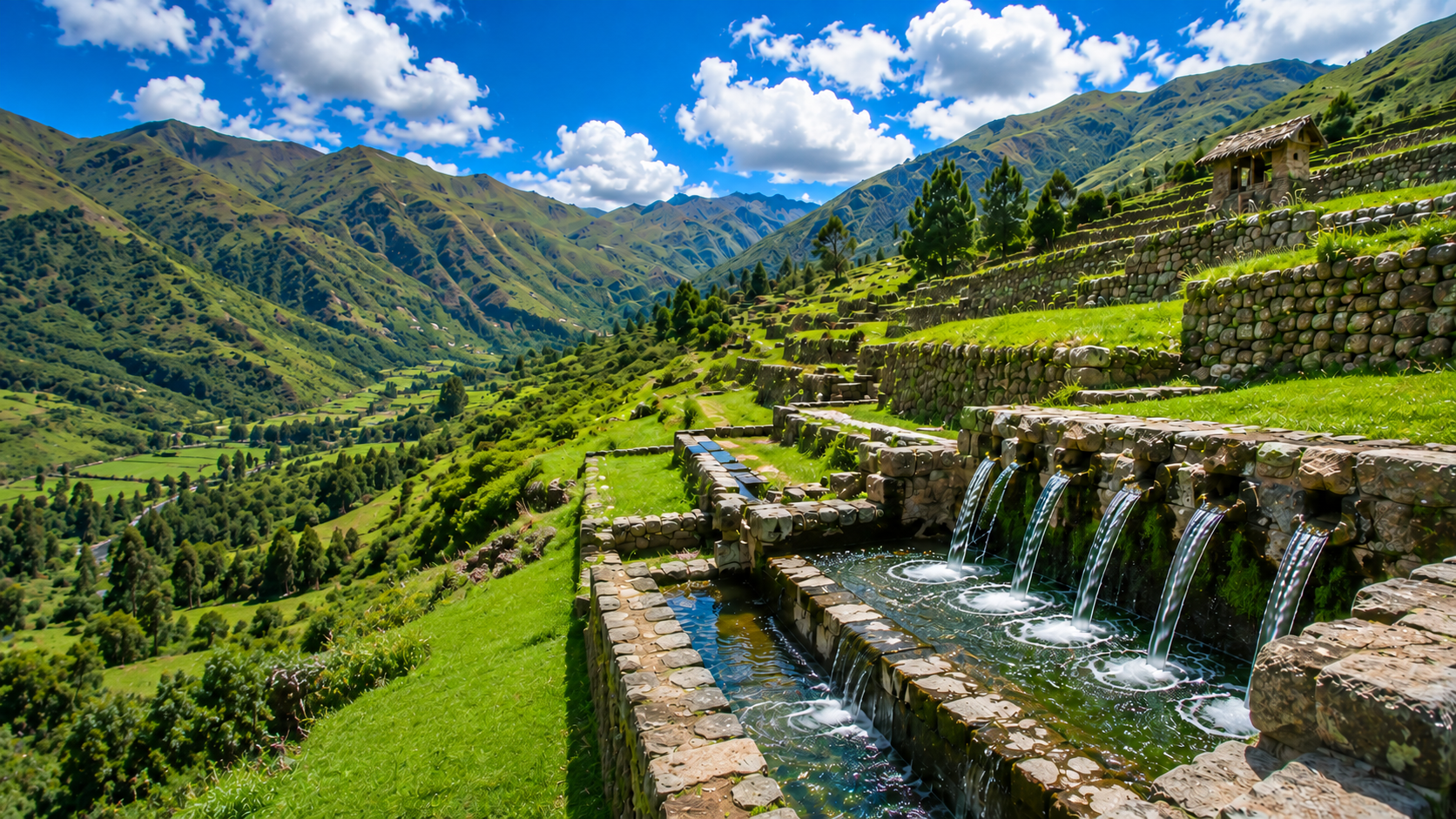

STILL FLOWING AFTER 500 YEARS For centuries, the water systems created by the Incas have fascinated engineers, archaeologists and hydrologists from around the world. Their precise canal gradients, sophisticated terraces and stone conduits have survived earthquakes, changing climates and more than five centuries of use. At Tipón, in the highlands near Cusco, that knowledge is still alive.
Researchers consider it one of the finest examples of Inca hydraulic engineering—a place where gravity, stone, soil and water were brought together with remarkable precision. Mateo studies civil engineering; I am pursuing architecture. At university, we had studied diagrams, calculations and cross-sectional drawings of Inca terraces. But nothing prepared us for what it felt like to stand there ourselves.
We arrived at Tipón at dawn. The air was crisp and thin as morning light slowly touched the terraces, revealing one stone wall after another. Before we could even see where it came from, we heard it: the quiet, musical murmur of water moving through stone. It did not roar. It whispered.
Discovering Tipón Near Cusco
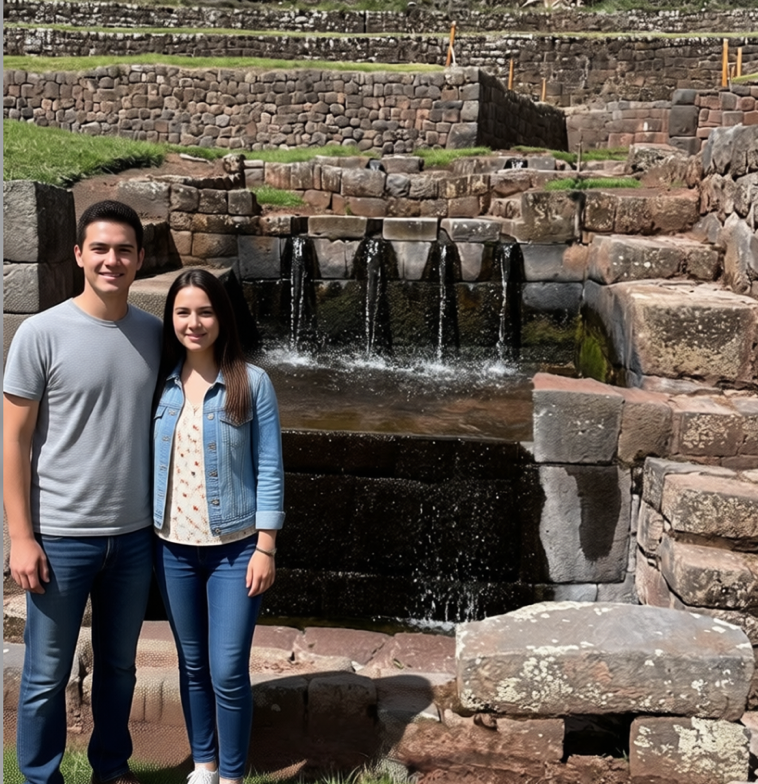
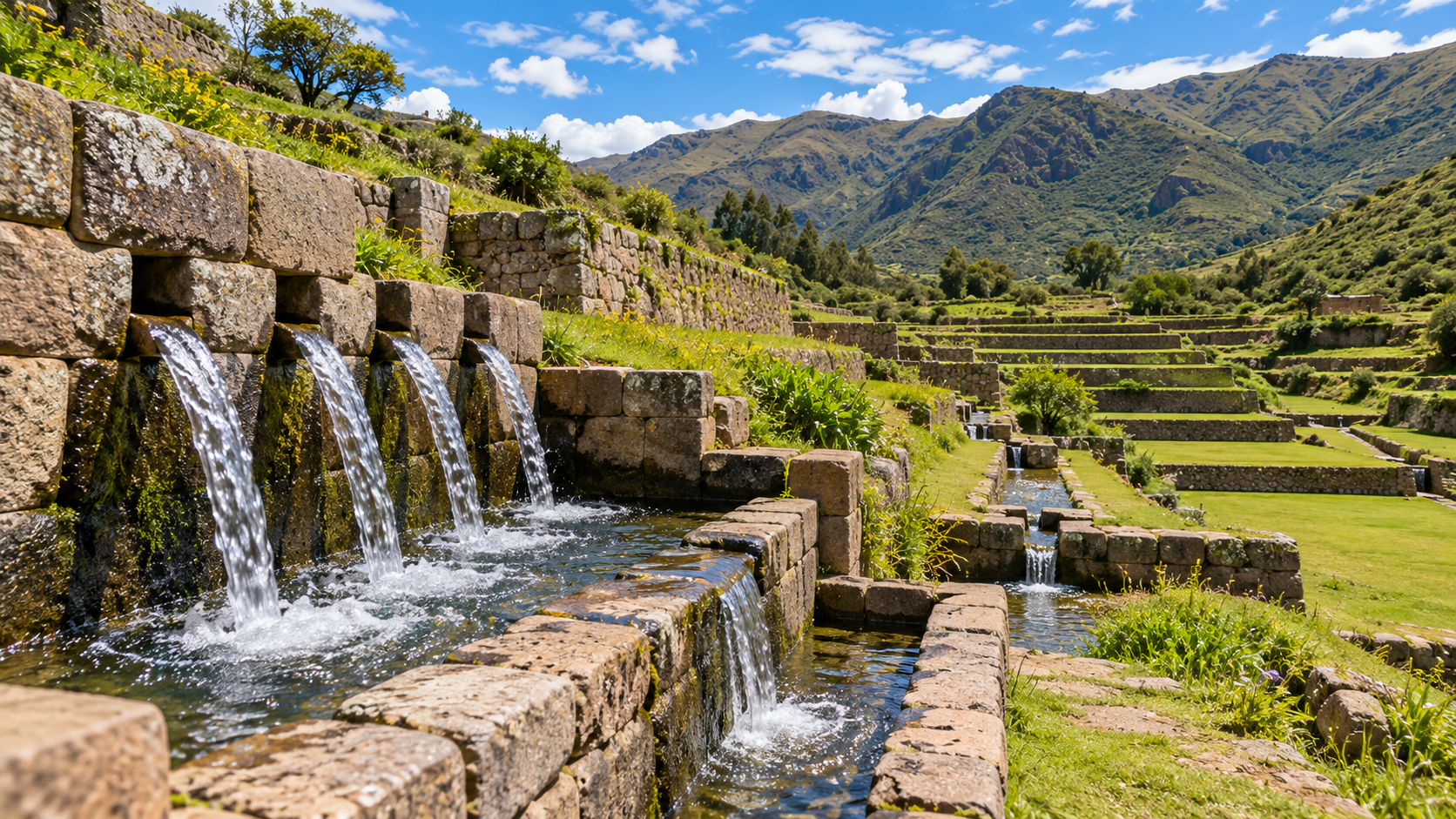
As we stepped onto the first terrace, Mateo stopped walking. “How did they build this without pumps, without modern pipes, without computers?” Water flowed through polished stone channels with astonishing precision, dividing evenly before spilling gently into fountains and continuing toward the terraces below. There was no turbulence, no waste, no visible erosion.
It was controlled—but never forced. Our guide, Don Hilario, greeted us with a warm smile. A descendant of local Quechua families who have preserved knowledge of the site for generations, he quickly discovered that we were students. “Then you must listen carefully,” he told us, his eyes bright with pride. “Tipón is not just beautiful. It is intelligent.”
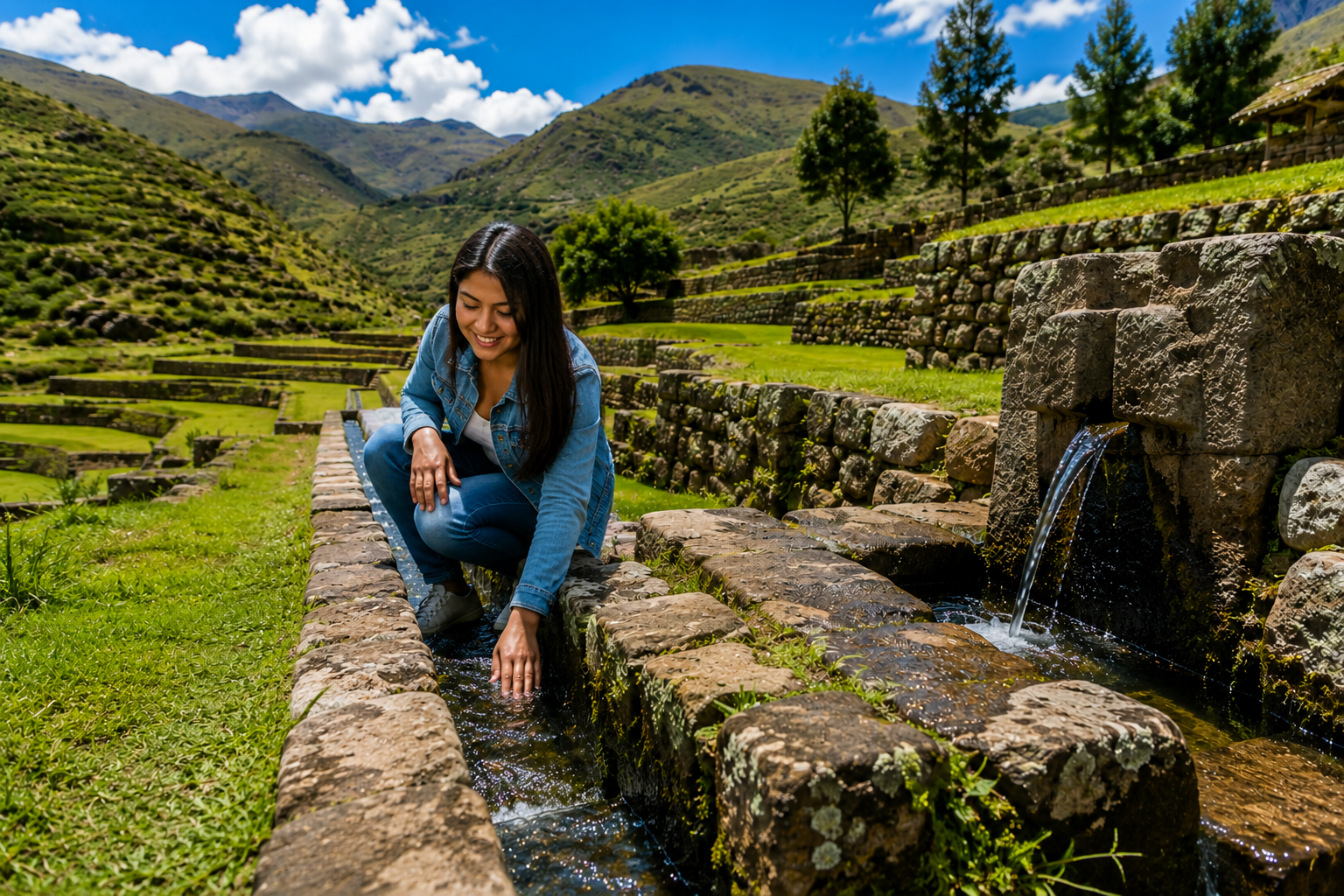
He led us toward one of the principal fountains, where spring water flows into perfectly aligned channels. The Incas, he explained, did not create this knowledge from nothing. They inherited and refined centuries of understanding from earlier cultures that had learned to read the land and observe the behavior of water. Mateo crouched beside one of the channels. The edges were sharp yet smooth, and the gradient was so subtle it was almost invisible. “Calculated by eye,” Don Hilario said. “But not by guesswork. By observation. By patience. By generations of learning how water behaves.”
The Genius of Inca Water Engineering
As students, we are trained to quantify. We measure slopes, calculate flow, analyze structures and try to predict how materials and water will behave. But standing among the terraces of Tipón, equations suddenly seemed like only part of the story. Each terrace is inclined just enough to allow water to move without pooling or eroding the soil. Stone channels guide it downhill, while subtle changes in width help control its velocity. What modern engineers call gravity-fed distribution, energy dissipation, drainage and pressure regulation was happening quietly in front of us.
And it had been designed more than 500 years ago. “What amazes me,” Mateo whispered, “is that there are no pumps, no concrete reinforcements, no modern control systems.” Don Hilario smiled. “The maintenance is built into the design. Water respects balance. If you give it harmony, it behaves.” The terraces revealed another layer of intelligence. Beneath the fertile soil, different sizes of stone and aggregate help drain water and regulate moisture, protecting both the structures and the crops.
Agricultural science and hydraulic engineering working together. Sustainability before the word existed. As the sun climbed higher, the terraces shimmered in shades of green and the fountains reflected the light like liquid mirrors. Mom stood quietly for a moment. “This is not just engineering,” she finally said. “It is poetry written in water and stone.”
Why Tipón Still Works After 500 Years
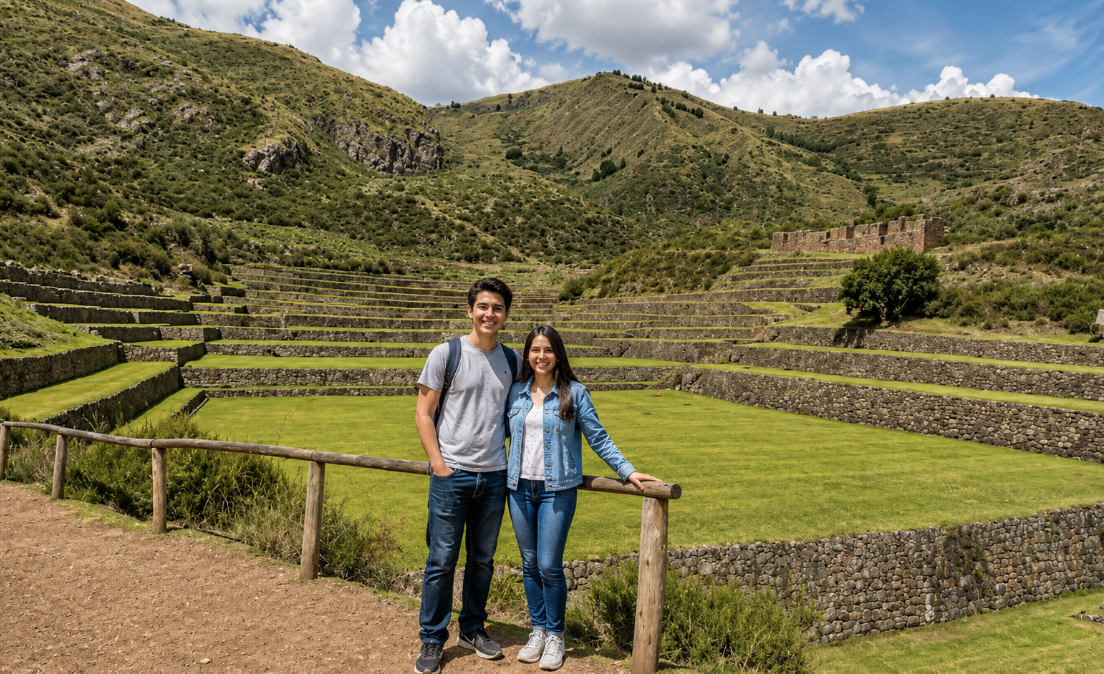
Perhaps the most extraordinary thing about Tipón is not simply how sophisticated it is. It is that it still works. No electricity. No pumps. No digital monitoring. Just elevation, stone, gravity—and an extraordinary understanding of how water behaves. Despite centuries of rain, drought, frost and seismic activity, the terraces remain stable and the water continues its journey through the channels. Precisely placed stonework, careful drainage and a design capable of distributing stress have allowed the system to endure. We followed the water downhill and tried to imagine the people who created all of this without modern blueprints, computer simulations or steel tools.
But they had something equally powerful: observation. They watched how rain moved across the slopes and where springs emerged. They learned how water accelerated downhill, how wider channels could slow it and how erosion changed the landscape. They experimented, remembered and passed that knowledge from one generation to another. At one fountain, the water separated through identical openings into perfectly balanced cascades. “Uniform distribution,” Mateo murmured. “Equal pressure.” Don Hilario nodded.
“When water arrives here, it is calm.” Then he said something I will never forget: “The stone calms it.” In engineering language, we might say the structure dissipates energy. In poetic language, it invites balance.
Where Engineering Meets Nature
We sat for a while on the edge of a terrace and shared some fruit Mom had packed. The sound of water became our background music. I thought about our university lectures, hydraulic models and the researchers who had used modern equations to understand what the Incas accomplished here. But sitting beside those ancient channels, validation suddenly felt unnecessary. The water flowing in front of us was proof enough. Five centuries of earthquakes, rain, drought, sun and frost—and still, the system performs.
That is why Tipón is something photographs can never fully explain. You have to hear the water, walk beside it as it travels from terrace to terrace, feel the cool stone beneath your hand and look up at the mountains surrounding you. Only then does the intelligence of the place become more than an engineering achievement. It becomes an experience. “Why do you think it survived?” I asked Don Hilario. “Because it was never built against nature,” he replied. “It was built with her.”
The terraces slow the water and reduce erosion. The canals control runoff. Spring water is distributed rather than simply extracted. Channels follow natural contours, and terraces adapt to the slope rather than trying to flatten it. Tipón does not dominate the landscape. It converses with it. Don Hilario also explained that water may have held ceremonial significance here. In the Andean worldview, water is more than a resource. It is connected to life, continuity and Pachamama—Mother Earth. Perhaps that understanding influenced the engineering itself. When you see nature as something to respect, you design differently.
What Tipón Can Teach Us About Sustainable Design
As the afternoon light softened and shadows stretched across the terraces, I felt something shift inside me. As an architecture student, I often think about form, materials, beauty and the experience of space. Mateo thinks about structures, calculations and hydraulic systems. Tipón brought those two worlds together. Beauty and function. Spirit and science. Precision and humility. We began walking slowly toward the exit. “In class,” Mateo said, “we define innovation as creating something new.” “And here?” I asked. He looked back toward the terraces.
“Here, innovation feels like remembering something essential.” Before leaving, Mom turned once more toward the water. “This is what happens when knowledge serves life instead of ego.” It was perhaps the best description of what we had experienced all day. True innovation can begin with respect, patient observation and listening to the land. Sometimes the most advanced solution is not the most complicated one, but the one that works most harmoniously with the world around it. That evening, back in Cusco, I looked again at some of the research we had studied. The mathematical models were impressive. Structural analyses explained Tipón's resilience, and hydraulic calculations helped explain why the system works. But none of those papers captured the sound of water at dawn, the feeling of ancient stone beneath your hand or the strange sensation that the mountain itself seems to participate in the design. Tipón taught us something no classroom could.
Technology without respect is fragile. Knowledge without patience is incomplete. Progress without harmony is unsustainable. The Incas observed first. Designed second. Built third. And they built for permanence. As students of engineering and architecture, we left Tipón changed. We still value equations and believe in innovation. But now we understand that some answers to the future of sustainable design may lie not only ahead of us—but behind us. In terraces that follow the land. In channels carved by hand. In water that flows by gravity alone. In a civilization that understood that to master water, you must first respect it. Tipón is not a ruin. It is a lesson still flowing. And as long as water continues to sing through its stone channels, the wisdom of the Incas will never fall silent.