


At 82, Still Curious
At 82, Miguel Lahura still has questions. How will artificial intelligence change the way people plan their journeys? What will technology do next? How should PeruTourism evolve? And perhaps most importantly, which things should never change?
More than six decades after beginning his professional life, curiosity has apparently refused to retire. His desk today looks very different from anything he could have imagined when his career began. Technology has transformed the travel industry again and again, and Miguel has spent much of his life trying to understand each new wave rather than resist it. But the origins of that curiosity — and of the perseverance that would accompany it — go back much further.
To understand them, we have to travel back to a one-hectare farm in the Andes of Junín.
the Lessons of a One-Hectare Farm
Miguel grew up as the son of a farmer in the Peruvian Andes. His father's world revolved around a small parcel of land of barely one hectare, but his interests reached far beyond it. He loved mathematics, studied English and had once dreamed of becoming an engineer. He tried to enter Peru's National University of Engineering, but never had the opportunity to pursue that path.
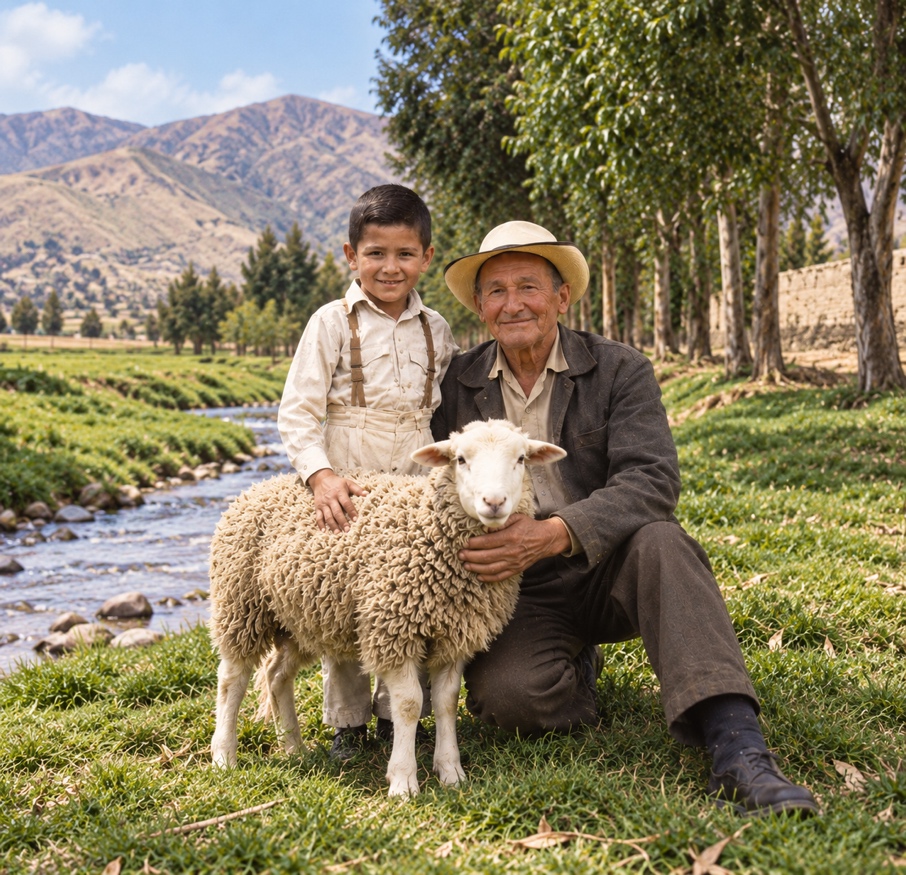
For Miguel, the farm became an early classroom. There were no lectures about leadership, business or strategy. Instead, there was the daily example of a man who worked, studied and continued learning despite the opportunities he himself had not been able to pursue. Three lessons stayed with Miguel:Work. Study. Perseverance.
His father never taught him about tourism, international trade or technology. He taught him something that would prove useful in all three: Keep going.
From Junín to Engineering
Years later, Miguel attempted something his father had once dreamed of doing himself. He applied to the National University of Engineering in Lima — and was admitted among the top-ranked students in the entrance examination. A scholarship, together with the support of his older sister, made it possible for him to study engineering. There is a quiet symmetry in that moment: a father who had wanted to become an engineer but never had the opportunity watched his son take that path.
Miguel graduated as an engineer. For many young professionals, that might have defined the rest of their working lives. For him, it was only the first turn in the road.
At 29, Harvard
Miguel's academic achievements soon opened another door. At the time, the Peruvian government was recruiting promising young professionals to work in public service. Miguel joined them, and after two years an even bigger opportunity appeared: a scholarship financed by the Ford Foundation for graduate studies at Harvard University. He applied.
He was admitted. He was 29 years old. Boston was a very different world from the one-hectare farm in Junín where his earliest lessons had begun. Yet Miguel adapted quickly — to the demanding rhythm of study, the environment and even the climate.
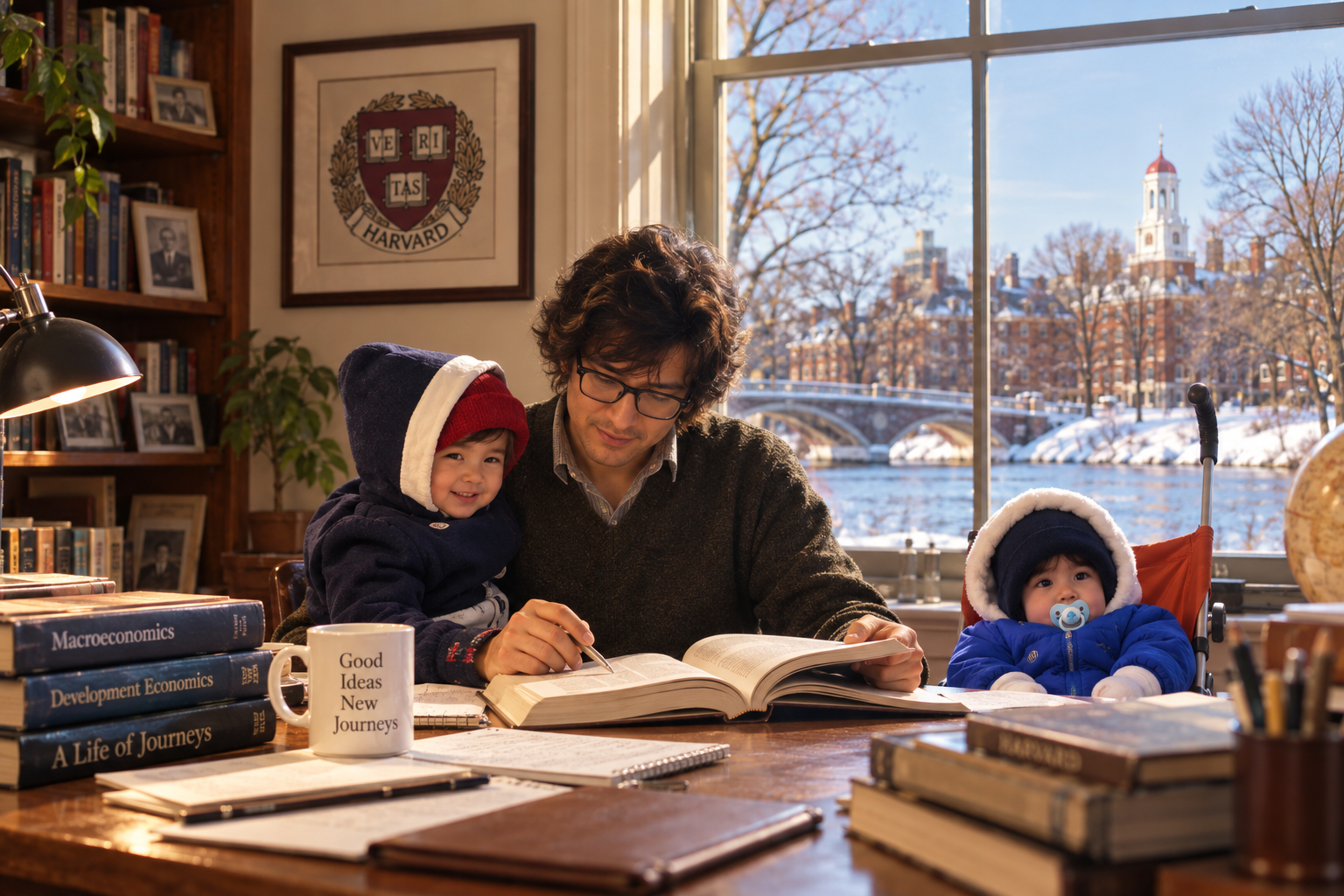
Harvard expanded his horizons. But the scholarship came with a commitment: when his studies were complete, he would return to Peru. And he did.
Coming Home
Back in Peru, Miguel continued his career in public service, taking on responsibilities connected to the country's international commerce. Eventually, he was appointed Vice Minister of Commerce. Engineering had taught him how to think about structures and problems. Government introduced him to something different: markets, international relationships and Peru's place in a much larger world.
Without realizing it yet, several pieces of his future were beginning to come together: Peru. International markets. Business.
And soon, travel.
When Travel Changed the Journey
When Miguel's time as Vice Minister came to an end, an airline entrepreneur offered him a new challenge: organize the airline's international network of commercial offices across Europe and Asia. It changed the direction of his career. Travel was no longer simply about moving people from one place to another. Miguel began to understand how Peru was presented abroad, how international markets worked and what inspired travelers to choose the country.
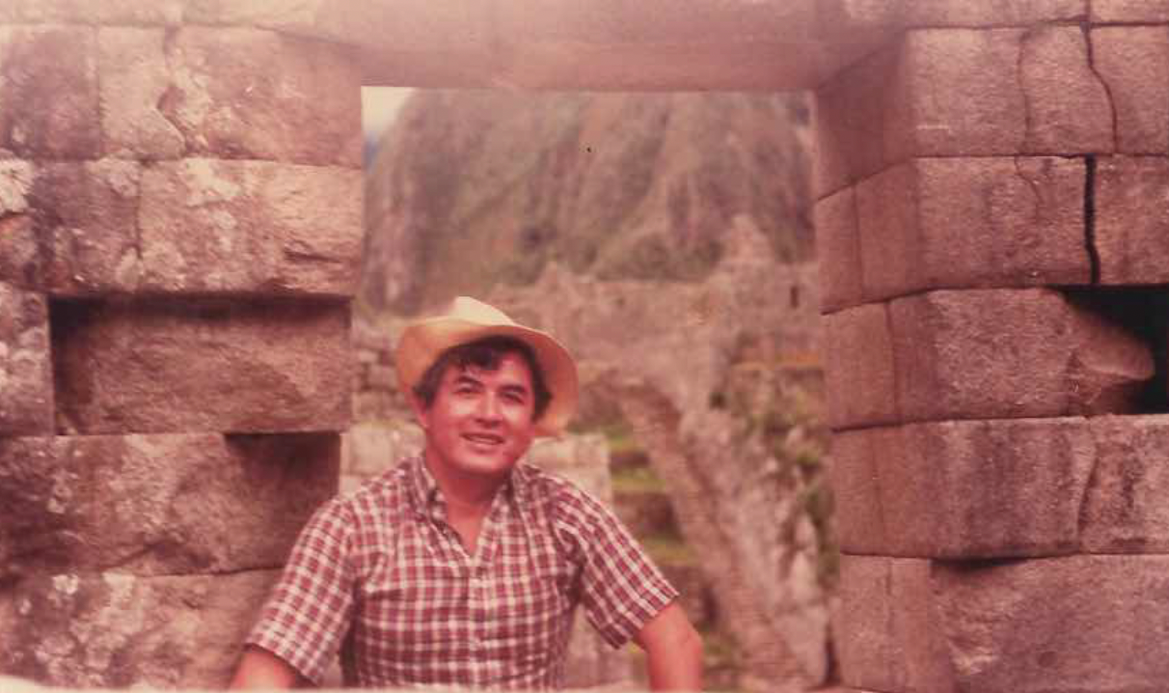
After two years, he proposed professionalizing the airline's international marketing. To do it, he created a wholesale travel company. Its name was Viajes Pentagrama.
Engineering was now far behind him. Travel had become his business. And increasingly, his passion.
An 18-Year-Old Intern
Somewhere in those early years, an 18-year-old intern arrived at Viajes Pentagrama. Her name was Maria Chahud. What began as an internship would eventually become one of the defining partnerships in the company's history.
For more than fifteen years, Miguel and Maria developed the wholesale travel business together. Miguel brought an instinct for systems, technology, experimentation and persistence. Maria brought something different: an unusual sensitivity toward people — employees, suppliers, business partners and, eventually, travelers.
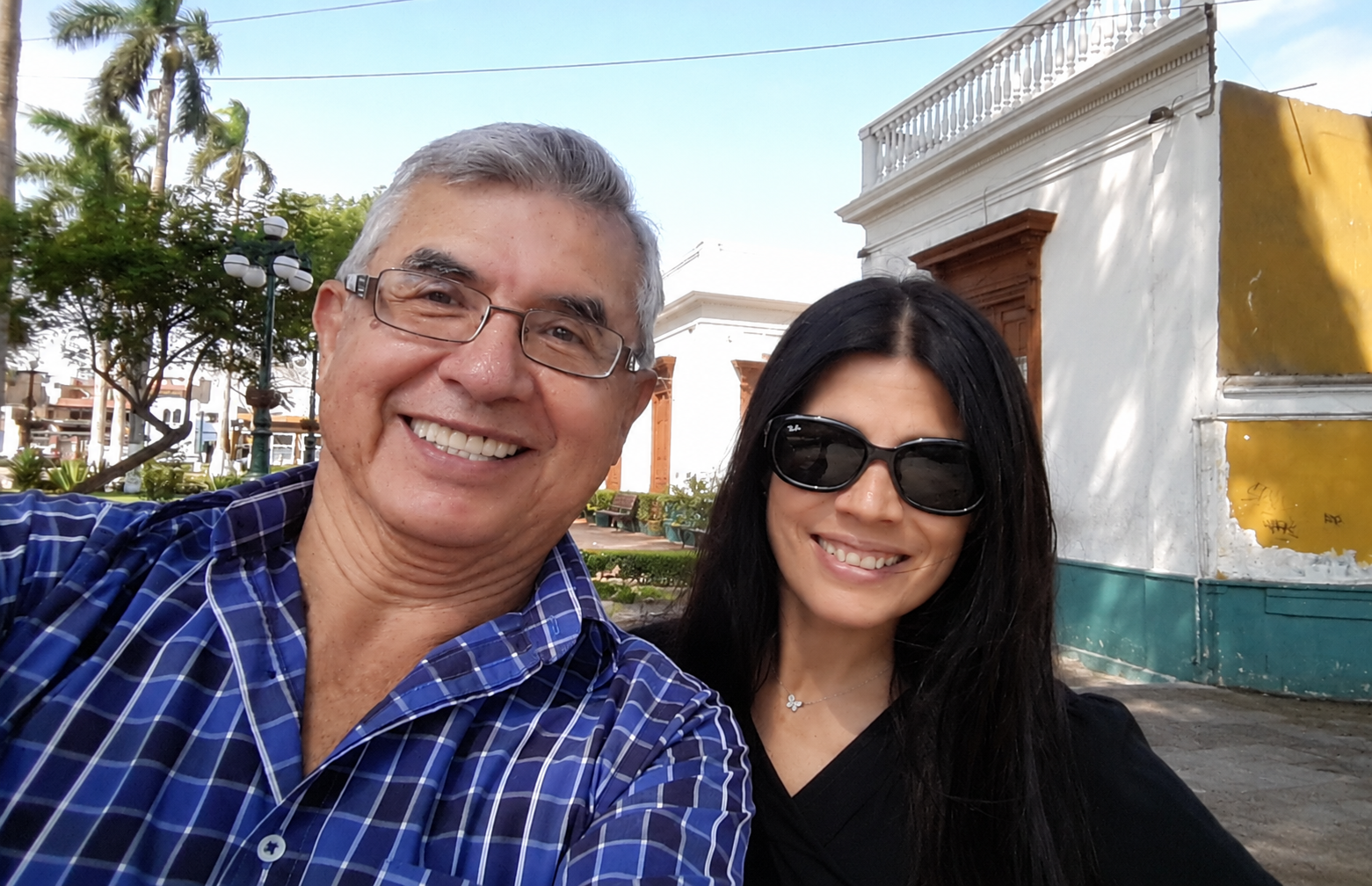
Over time, Miguel realized that one of the most important lessons he learned from Maria had little to do with tourism. It was the importance of relationships with the people who work beside you. The young intern learned the business.
The founder learned from the intern. And somewhere along the way, they began building something neither could have built in quite the same way alone.
When the Business Model Disappeared
After more than fifteen years, the airline around which much of Viajes Pentagrama's wholesale business had developed stopped flying. Suddenly, the model they had built no longer had a future. They could have spent their energy trying to preserve it. Instead, they changed direction.
It was the end of the twentieth century, and something called the Internet was beginning to transform how people communicated, searched for information and, eventually, traveled. Miguel and Maria saw an opportunity. They created PeruTourism. Rather than depending on the traditional distribution model, they began using technology to connect travelers more directly with Peru.
It was a fundamental reinvention of the business — and another lesson in what perseverance actually meant. Sometimes perseverance isn't about holding on. Sometimes it's about knowing when to change.
Two Strengths, One Vision
PeruTourism grew from the combination of two very different strengths. Miguel remained fascinated by technology and the possibility of doing things differently. He was willing to experiment, change systems and question established ways of working.
Maria brought intelligence and another kind of strength: an instinctive consideration for others. She understood how employees should be treated, how relationships with suppliers should be cultivated and how business partners should be respected. Over time, those qualities shaped not only how they worked together, but the character of the company itself.
Technology could make the business more efficient. Perseverance could help it survive difficult moments. But people had to remain at the center.
Passing the Torch
When Miguel was approaching 65, he attended an executive seminar. One idea stayed with him. The speakers discussed succession in founder-led companies and warned about the “old pioneer” — the entrepreneur who builds a successful company but eventually becomes so attached to his own way of doing things that he begins resisting change. Miguel recognized the danger. He didn't know how many more years of creativity or new ideas he had ahead of him, and he didn't want the company to discover the answer too late.
So, at 65, he passed the leadership of the business to Maria. She became CEO. It wasn't a decision to stop caring about the company. It was a decision to give it room to continue evolving. Building something requires determination.
Knowing when to let someone else lead it requires another kind of confidence. As it turned out, Miguel's concern about running out of ideas may have been slightly premature. Seventeen years later, he is still proposing them.
When Travel Stopped
Then came 2020. Airports emptied. Borders closed. Flights disappeared from departure boards. Reservations were cancelled one after another.
The world stopped traveling.

For a company built around bringing international travelers to Peru, the crisis was existential. PeruTourism's field operator and business partner was Condor Travel, at the time the country's leading tourism operator. Suddenly, neither company had travelers to welcome. Miguel and Maria responded in the way they knew best: with perseverance, optimism and the belief that tourism would eventually return.
PeruTourism retained approximately 80% of its employees. Miguel committed his personal savings to help prevent the company from failing. And in the middle of the greatest crisis the travel industry had experienced, they did something else. They began preparing for the future.
Go Latin Travel was created, expanding beyond Peru and opening the company to new destinations and opportunities across Latin America. Once again, perseverance didn't mean standing still. It meant adapting.
the Travelers Who Came Back
Then, in November 2020, something happened that today might sound small. At the time, it was anything but. Jerry Hudgins and his wife arrived in Peru.
After months without operations, they became PeruTourism's first returning travelers — and, because Condor Travel operated their journey on the ground, Condor's first passengers since the tourism shutdown as well. To celebrate their arrival and everything it represented after so many months without travelers, Jerry and his wife were invited to lunch at Miguel's home.
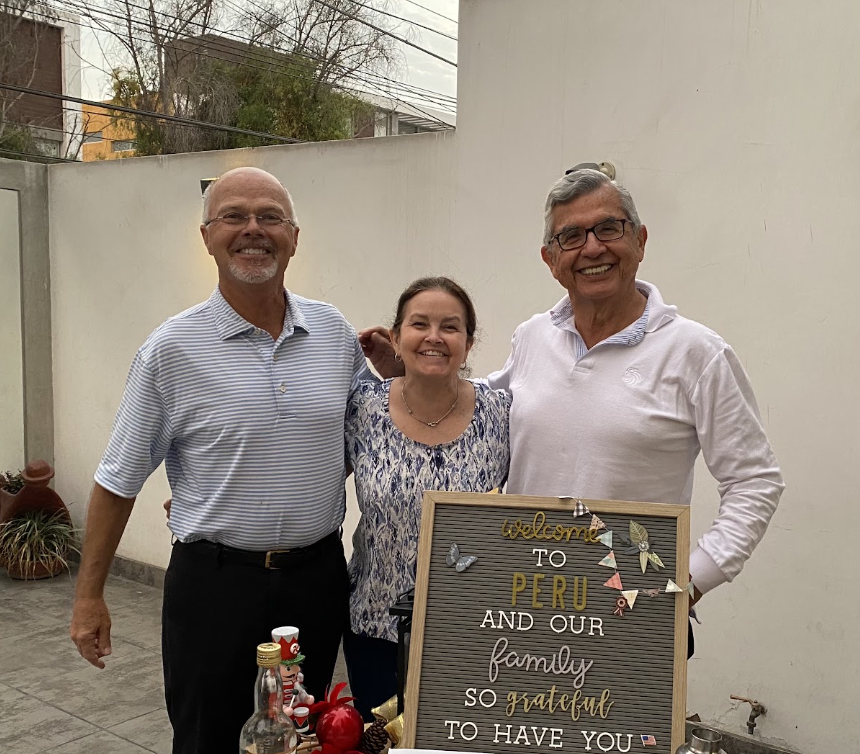
For two companies accustomed to welcoming travelers every day, two passengers suddenly meant something entirely different. They meant somebody was traveling again. Guides could guide again. Vehicles could move again. An itinerary carefully planned on a computer could once more become a real journey through Peru.
After months of uncertainty, tourism had produced its first small sign of life. For Miguel, it confirmed something he had believed throughout the crisis: Travel would return. The industry might be different. The company might have to change again.
But the journey wasn't over.
At 82, Still Looking Forward
Today, Miguel is 82. The travel industry bears little resemblance to the one he entered decades ago. First came the Internet. Then online booking, smartphones, social media, automation and entirely new ways for travelers to discover the world.
Now there is artificial intelligence. And Miguel is once again trying to understand what it means.
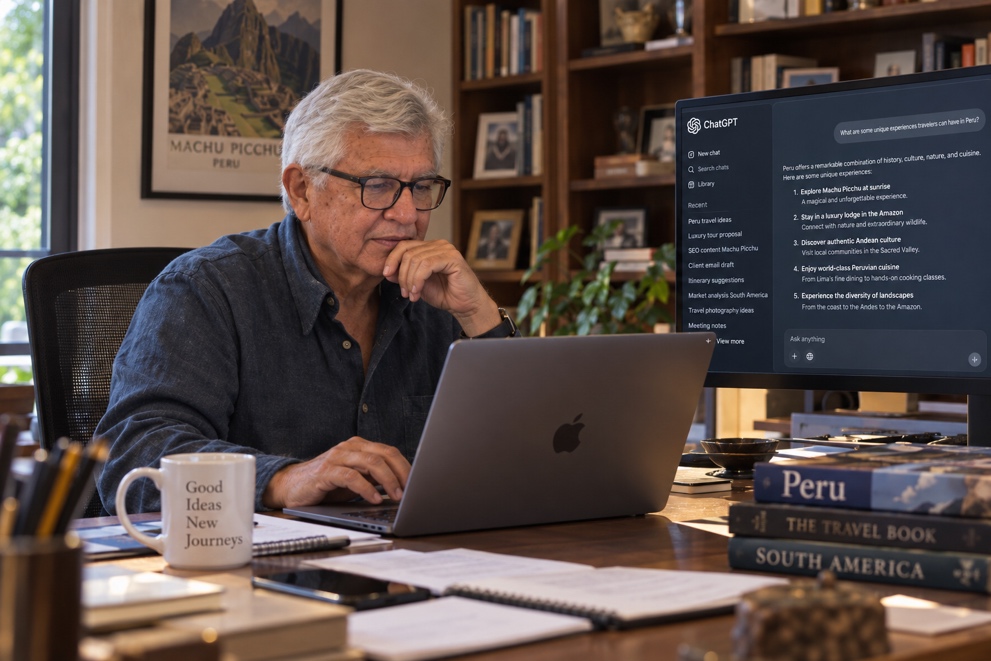
Not because every new technology must be adopted. Not because everything new is necessarily better. But because refusing to understand change has never seemed like a particularly good strategy. There is some irony in that.
At 65, Miguel transferred leadership to Maria partly because he was determined not to become the “old pioneer” who resisted change and held the next generation back. Seventeen years later, he is still asking: What should change next? Perhaps he simply postponed becoming the old pioneer a little longer.
the Lesson That Never Changed
Miguel's father never made it to engineering school. He never saw the Internet. He could not have imagined artificial intelligence, online travel planning or a company using technology to connect travelers around the world with Peru. But on that one-hectare farm in Junín, he understood something his son would spend a lifetime rediscovering. Work matters. Study matters. Learning matters.
And when circumstances change, you keep going. Miguel's path took him far from that small piece of land — to engineering, Harvard, public service, international commerce, aviation and eventually tourism. Along the way, he changed professions, changed business models, built a company with Maria, passed its leadership to her, risked his own savings when the world stopped traveling and watched travelers return. At 82, he is still trying to understand what comes next. The technology has changed. The business has changed.
The world has changed. But the lesson from that one-hectare farm in Junín never did. Keep learning. Keep changing. Keep going.